
Discover why emotional safety in relationships is the key to trust, deeper connection, and lasting love, plus practical ways couples can build emotional security every day.
Every strong relationship is built on more than attraction or affection. At the center of lasting love lies emotional safety.
Emotional safety means that both partners feel comfortable expressing their thoughts, feelings, and concerns without worrying about misunderstanding, disagreement, or negative feedback. When emotional safety exists, communication becomes open and honest.
In many relationships, partners hide their true emotions because they worry about conflict or misunderstanding. Over time this creates distance and emotional disconnection.
However, when a couple creates emotional safety, both partners feel respected, heard, and valued. This foundation strengthens trust and helps the relationship grow stronger during both happy moments and difficult challenges.
Emotional safety allows partners to share vulnerability without worrying about being dismissed or misunderstood. It encourages empathy, patience, and deeper understanding. As a result, couples who prioritize emotional safety often experience stronger connection, better communication, and a healthier long-term relationship.
What Emotional Safety in Relationships Really Means
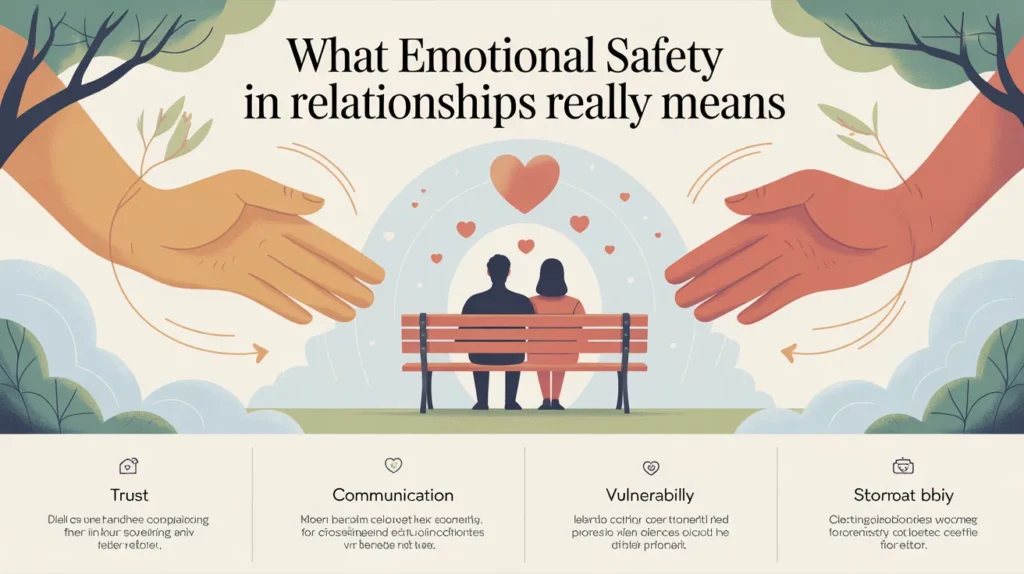
Emotional safety in relationships means you can speak honestly without worrying about negative feedback, disconnection, or emotionally unhelpful responses. When emotional safety exists, both partners feel comfortable sharing their feelings, opinions, and vulnerabilities. You are able to express concerns or mistakes without worrying that your partner will react with emotional reactivity or judgment.
In a healthy relationship, emotional safety creates a space where openness is welcomed instead of avoided. Partners listen carefully, respond with respect, and try to understand each other’s perspective.
This environment helps couples solve problems calmly and strengthens trust over time. When emotional safety is missing, people often hide their emotions, avoid difficult conversations, or become overly cautious in communication around their partner.
A relationship that includes emotional safety encourages honesty, empathy, and emotional support. Both partners feel valued and accepted for who they truly are. Over time, this sense of security builds deeper intimacy and allows the relationship to grow stronger even during challenges.
Why Emotional Safety Strengthens Long-Term Relationship Health
Love alone does not guarantee a healthy relationship. Many couples love each other deeply yet still struggle with conflict, misunderstandings, or emotional distance.
Without emotional safety, even strong feelings of love can turn into frustration or insecurity. Emotional safety allows love to grow in a stable and supportive environment.
When partners feel emotionally safe, they can communicate openly about concerns, needs, and expectations. This openness helps prevent small issues from turning into major problems.
In contrast, relationships without emotional safety often lead to silence, resentment, or constant tension. One or both partners may feel unheard or judged.
Over time this weakens the connection between them. Emotional safety acts as the foundation that protects love and allows it to deepen, creating a relationship built on trust, respect, and understanding.
Signs Your Relationship Has Emotional Safety
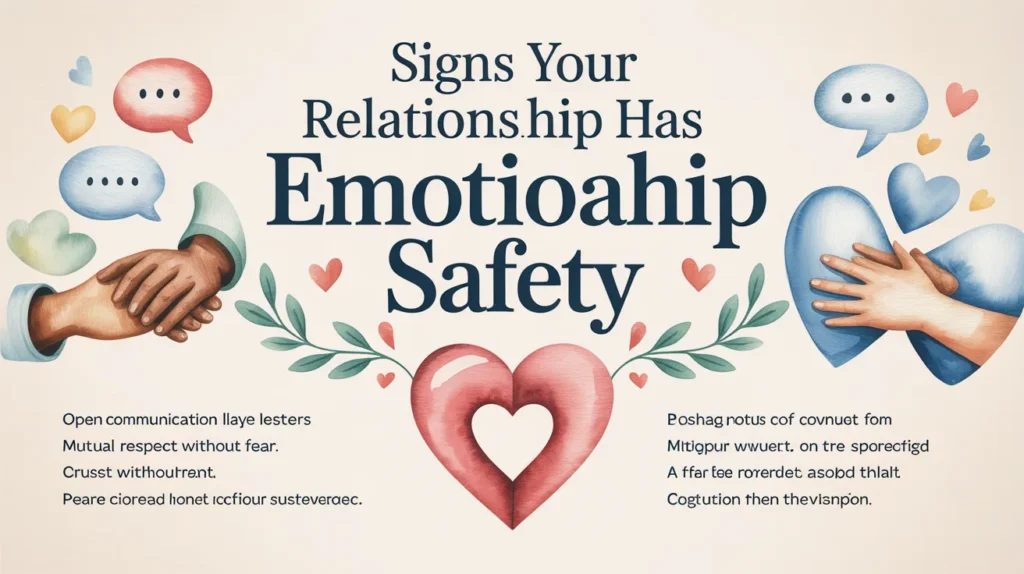
One clear sign of emotional safety is the ability to speak openly without worrying about negative feedback. In emotionally safe relationships, partners feel comfortable sharing their thoughts, worries, and feelings honestly.
They know their partner will listen with patience rather than react with emotional reactivity or judgment. This openness creates stronger communication and deeper trust.
Another sign is mutual respect during disagreements. Conflicts still happen, but both partners try to understand each other instead of trying to win the argument.
They avoid insults, responsibility shifting, or emotional withdrawal. Instead, they focus on resolving the issue together while protecting each other’s feelings.
Emotional safety also appears through consistent support and understanding. Partners celebrate each other’s successes and offer comfort during difficult moments.
They validate each other’s emotions rather than dismiss them. Over time, these behaviours build a sense of security where both people feel valued, respected, and emotionally protected in the relationship.
Communication Patterns That Influence Emotional Safety
Emotional safety can quickly disappear when negative communication patterns become common. One of the most counterproductive communication patterns is constant negative feedback.
When a partner frequently points out flaws, mocks feelings, or dismisses concerns, the other person may begin to feel judged or emotionally uncomfortable. Over time, this can lead to silence and emotional withdrawal.
Another harmful behavior is reacting with emotional reactivity or defensiveness during difficult conversations. If one partner becomes highly reactive, interrupts constantly, or refuses to listen, meaningful communication becomes impossible.
The relationship then shifts from understanding to conflict, making both partners hesitant to express their true emotions.
Emotional safety is also damaged when trust can weaken through inconsistent communication, misunderstanding, or reduced emotional responsiveness. Ignoring a partner’s feelings or minimizing their experiences creates distance and insecurity.
Healthy relationships protect emotional safety by replacing these behaviours with empathy, patience, and respectful communication.
How Couples Build Emotional Safety Over Time
Emotional safety does not appear overnight. It grows slowly through consistent actions and respectful communication. Couples build emotional safety when they listen to each other without interrupting and show genuine interest in their partner’s feelings. This kind of patience helps both partners feel understood and valued.
Trust also develops when partners respond calmly during emotional conversations. Instead of reacting with responsibility shifting or defensiveness, they try to understand the situation from each other’s perspective.
Small actions such as offering sincere apologies, keeping promises, and offering reassurance strengthen the sense of security in the relationship.
Over time, these positive behaviors create a safe emotional environment where both people feel comfortable being themselves. As trust increases, partners become more open, supportive, and emotionally connected. This steady effort helps couples maintain a relationship built on understanding, respect, and long-term emotional stability.
Active Listening: The First Step to Emotional Safety
Active listening is one of the most powerful ways to create emotional safety in a relationship. It means giving your partner full attention when they speak instead of interrupting, judging, or preparing a response too quickly. When someone feels truly heard, they naturally feel more comfortable sharing their thoughts and emotions.
In healthy relationships, active listening involves maintaining eye contact, acknowledging what your partner is saying, and responding thoughtfully.
Simple responses such as “I understand how you feel” or “Tell me more about that” can show empathy and support. These small actions reassure your partner that their feelings matter.
Over time, active listening strengthens trust and emotional connection. When both partners feel understood, misunderstandings become easier to resolve and conflicts become less damaging. This habit creates a supportive environment where honesty and vulnerability can exist without concern.
Why Empathy Creates Deeper Emotional Connection
Empathy allows partners to understand each other’s emotions instead of simply reacting to situations. When you show empathy, you try to see the world from your partner’s perspective.
This helps you understand not only what they are saying but also how they are feeling. Feeling understood strengthens emotional safety in relationships.
In emotionally healthy relationships, empathy appears during both happy and difficult moments. When a partner shares frustration, sadness, or concern, an empathetic response shows support rather than judgment. Simple responses such as acknowledging their feelings or offering comfort can help them feel accepted and respected.
Over time, empathy deepens emotional connection because it creates a sense of partnership. Both people feel that their emotions matter and that they are not facing challenges alone. This emotional understanding strengthens trust and helps couples maintain a caring and supportive relationship.
How Validation Strengthens Trust in Relationships
Validation means acknowledging your partner’s feelings and showing that their emotions are important and understandable. It does not always mean you agree with everything they say. Instead, it means you respect their experience and recognize that their feelings are real. When a partner feels validated, they feel heard and emotionally supported.
In relationships, validation can be expressed through simple responses such as “I understand why you feel that way” or “Your feelings make sense.” These responses show empathy and acceptance. When partners regularly validate each other, communication becomes more open and honest because neither person feels dismissed or ignored.
Over time, validation builds strong trust between partners. It reduces defensiveness and encourages emotional honesty. When both people know their emotions will be respected, they feel safer expressing themselves. This creates a relationship environment where trust, understanding, and emotional connection continue to grow.
Daily Habits That Maintain Emotional Safety

Emotional safety in relationships is not created by one big moment. It is maintained through small daily habits that show care and respect. Simple actions such as checking in with your partner, asking about their day, and showing appreciation help reinforce the feeling that their emotions matter. These daily gestures strengthen trust and keep communication open.
Another important habit is handling disagreements calmly. Instead of reacting with emotional reactivity or responsibility shifting, emotionally safe couples focus on understanding each other’s perspective. Apologizing when necessary and expressing gratitude regularly also helps maintain a positive emotional environment.
Over time, these consistent behaviors build a stable foundation for the relationship. When partners feel supported and valued every day, emotional safety becomes a natural part of the relationship. This allows love, trust, and connection to continue growing in a healthy and lasting way.
Conclusion
Emotional safety is the foundation that allows love to grow and survive difficult moments in a relationship. When partners feel comfortable expressing their feelings without concern of judgment or negative feedback, trust and understanding naturally become stronger. Building emotional safety in relationships requires patience, empathy, and consistent effort from both partners.
Simple habits such as active listening, validating emotions, and communicating with respect help create a supportive environment where both people feel valued. Over time, these behaviors strengthen connection and prevent misunderstandings from damaging the relationship. When couples prioritize emotional safety in relationships, they create a space where honesty, trust, and emotional intimacy can thrive.
A healthy relationship is not just about love; it is about feeling secure enough to be your true self. By practicing empathy, compassion, and open communication every day, partners can maintain emotional safety in relationships and build a lasting bond filled with trust, respect, and deeper connection.
FAQs
How do you give emotional safety to your partner?
You create emotional safety by listening without judgment, respecting your partner’s feelings, and communicating calmly during disagreements. When partners feel heard and valued, emotional safety in relationships grows naturally.
What is emotional safety for a woman?
Emotional safety for a woman means feeling respected, understood, and free to express emotions without worrying about negative feedback or disconnection. It allows her to trust her partner and feel supported during both happy and difficult moments.
What are signs of emotional safety?
Signs of emotional safety include open communication, mutual respect, honest conversations, and the ability to share feelings without concern. In healthy relationships, both partners feel comfortable being vulnerable and expressing their true emotions.
What does emotional safety look like for a man?
For a man, emotional safety means feeling accepted and respected without pressure to hide emotions. It allows him to share concerns, feelings, and thoughts openly while knowing his partner will respond with understanding rather than judgment.
What factors can reduce emotional safety in relationships?
Emotional safety may decrease when communication becomes inconsistent, emotionally reactive, or less responsive. Healthy communication habits, empathy, and mutual respect can help strengthen emotional security over time.

Educational Disclaimer
This article is provided for educational and informational purposes only. It explores relationship psychology concepts related to emotional safety, communication, trust, and interpersonal connection. The content is not intended to diagnose, treat, or replace professional mental health, medical, or relationship counseling services. Healthy relationships are built through mutual respect, empathy, and constructive communication. Readers experiencing significant relationship difficulties may benefit from consulting a qualified mental health or relationship professional.

