

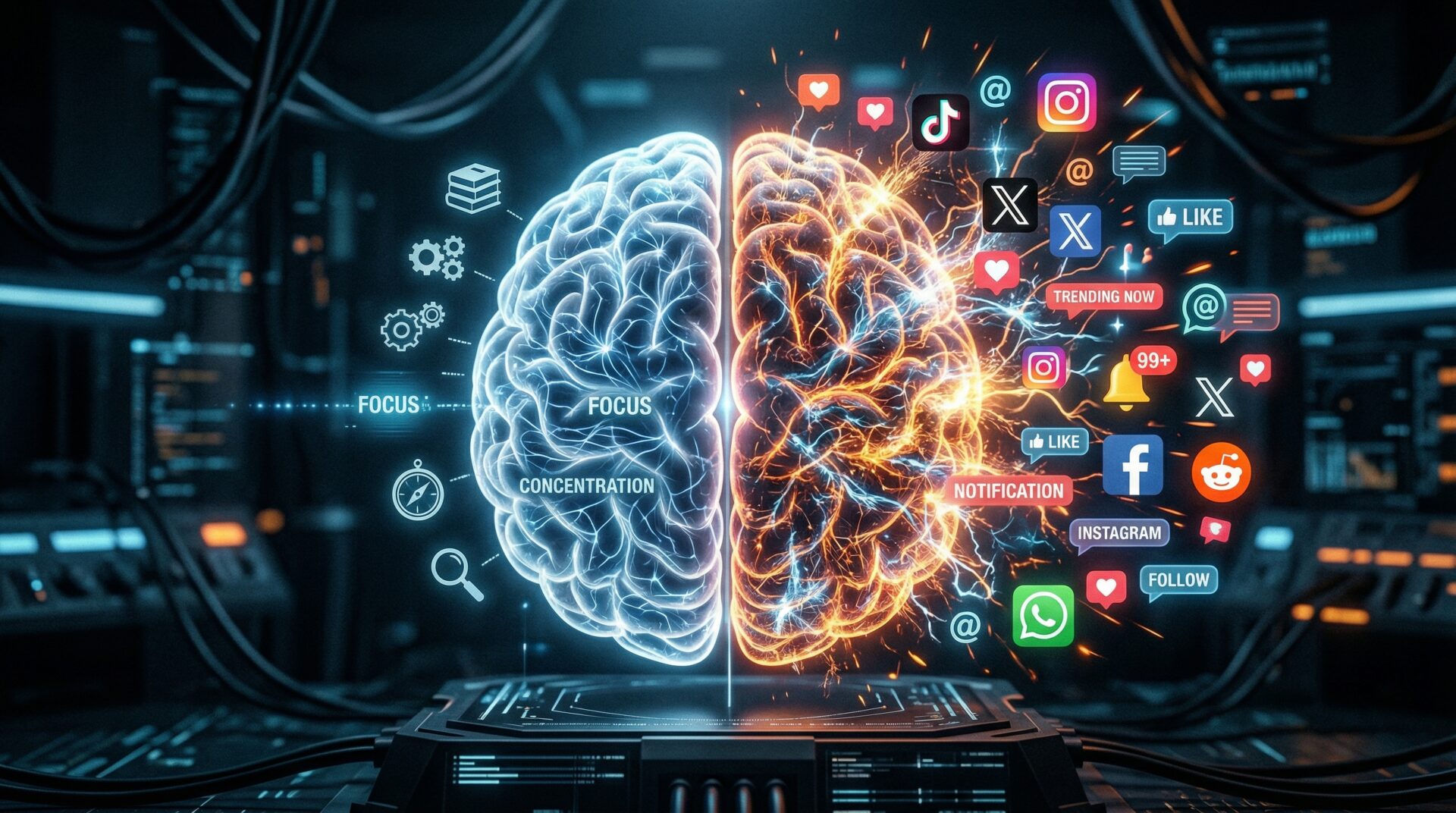

Why can’t I focus even when I try?
It’s 9:00 AM.
You start working… then suddenly—you check your phone.
One notification turns into five. Then email. Then a quick scroll.
You sit down with a clear goal. Coffee ready. Laptop open.
You look up.
It’s 9:47 AM.
Your coffee is cold. Your task untouched.

Here’s the truth:
👉 You didn’t “fail.” Your brain was outmaneuvered.
If you often ask yourself, “Why can’t I focus even when I try?”, you’re not alone. This is a deeply neurological issue, not just a lack of discipline.
Focus as a Survival Mechanism (Not a Discipline Problem)
Your brain wasn’t designed for deep work—it was designed for survival.
- Novelty = potential opportunity
- Distraction = possible threat
- Easy reward = energy conservation
In ancient environments, this was useful.
Today?
It’s a disaster.
You’re living with a Stone Age brain in a digital world engineered to hijack it.
Why can’t I focus even when I try? (Neuroscience Explained)
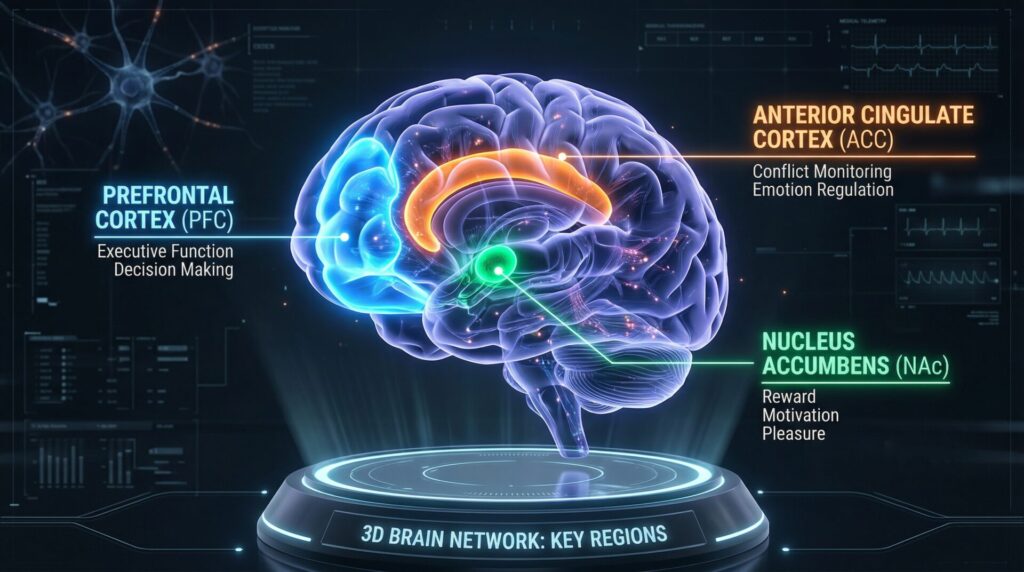
To truly understand why can’t I focus, you need to understand the three key systems controlling your attention.
Why can’t I focus? Dopamine, Motivation, and Distraction Explained
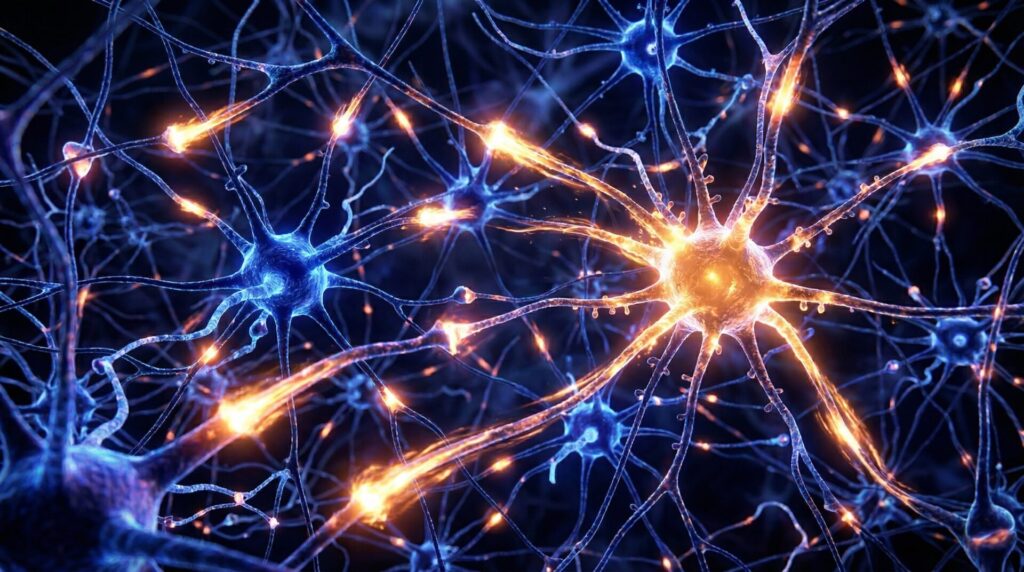
Dopamine isn’t about pleasure—it’s about anticipation and pursuit.
Neuroscientifically, it works through something called Reward Prediction Error (RPE):
- Unexpected reward → big dopamine spike
- Expected reward → smaller response
- No reward → dopamine drop
This is why:
- Scrolling feels addictive
- Notifications feel urgent
- Uncertainty keeps you hooked
Dopamine Spikes vs Baseline (The Ocean Model)
Think of dopamine like an ocean:

- Baseline = sea level (your normal motivation)
- Spikes = waves (temporary excitement)
Every time you:
- Check social media
- Eat junk food
- Switch tasks
You create a spike.
But here’s the catch:
👉 High spikes lower your baseline afterward
If you’re struggling with mental fatigue and low motivation, you should also read how to improve mental health naturally in daily life.
👉 How to Improve Mental Health Without Spending Money
That’s why after scrolling:
- Work feels boring
- Focus feels painful
- Motivation disappears
Dopamine Downregulation & Tolerance
Over time, your brain adapts.
Too many spikes → brain removes dopamine receptors
This is called downregulation.
Result:
- You need more stimulation
- Normal tasks feel unrewarding
- You become dependent on distraction
This is the hidden mechanism behind dopamine and distraction.
The Nucleus Accumbens: Why You Crave Distraction
This is your brain’s craving center.
It doesn’t care about:
- Goals
- Productivity
- Long-term success
It only cares about:
👉 “What gives me the fastest reward right now?”
That’s why:
- You check your phone mid-task
- You open new tabs without thinking
- You chase novelty instead of progress
The Prefrontal Cortex: Your Focus “CEO”
Your Prefrontal Cortex (PFC) is responsible for:
- Planning
- Decision-making
- Concentration
But here’s the problem:
👉 It gets tired.
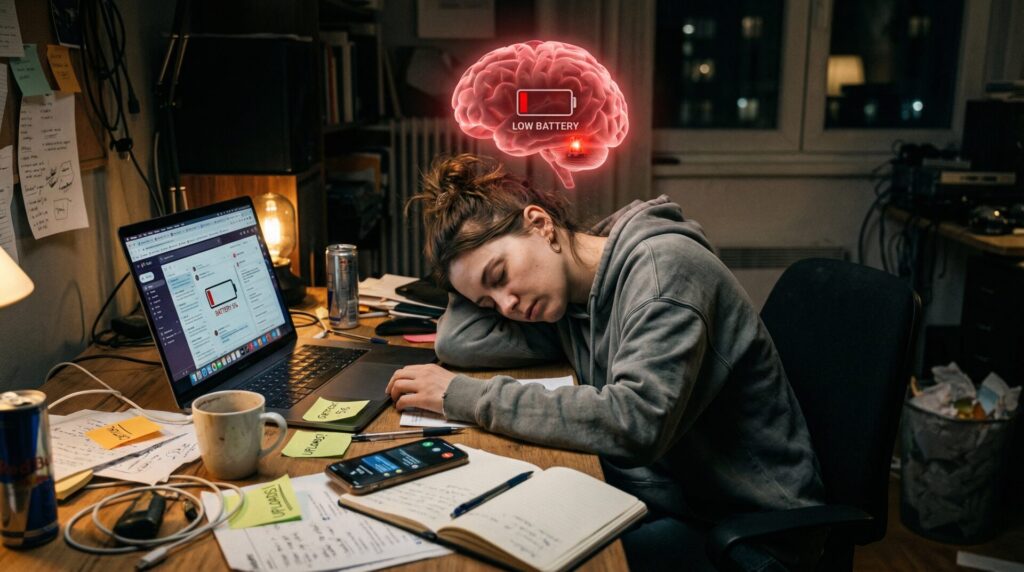
Every decision, distraction, and notification drains it.
This leads to:
Poor sleep and anxiety can make focus even worse, especially if you’re dealing with sleep-related stress.
🔗 Link:
👉 Sleep Anxiety: How to Stop the Fear of Not Sleeping Naturally
- Decision fatigue
- Reduced attention span
- Poor impulse control
This kind of mental exhaustion is also common in people dealing with imposter syndrome in high-pressure environments.
🔗 Link:
👉 9 Signs of Imposter Syndrome in High Achievers
The Anterior Cingulate Cortex: The Effort Calculator
This region asks one question:
👉 “Is this worth the effort?”
If a task feels:
- Too hard → you avoid it
- Too boring → you escape it
This is why difficult work triggers procrastination.
The Neurochemical Trio: Dopamine vs Serotonin vs Norepinephrine
Focus isn’t just dopamine—it’s a balance.
| Chemical | Role | Low Levels Feel Like |
|---|---|---|
| Dopamine | Motivation | “Why bother?” |
| Serotonin | Mood | Anxiety, irritability |
| Norepinephrine | Alertness | Brain fog, fatigue |
👉 Optimal focus happens in a “Goldilocks zone”:
- Not overstimulated
- Not under-aroused
🧠 Why You Can’t Focus in the Modern World
At this point, you might still be wondering: why can’t I focus as I used to? The answer lies in how your brain adapts to constant stimulation.
Your brain hasn’t changed—but your environment has.
And it’s designed to destroy your attention.
Variable Reward Systems (The Social Media Trap)
Apps use the same mechanism as slot machines.
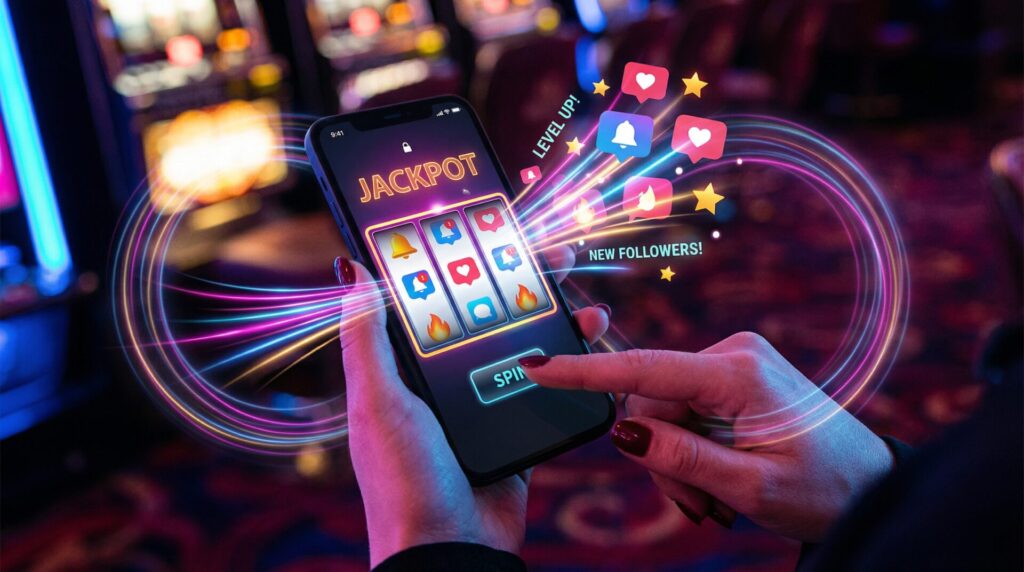
👉 Unpredictable rewards = maximum dopamine
You don’t know:
- What you’ll see next
- When the reward will come
So your brain keeps scrolling.
Attention Residue & The Myth of Multitasking
Every time you switch tasks:
👉 Part of your brain stays stuck on the previous one
This is called attention residue.

Even a quick distraction can reduce performance for 20+ minutes.
Multitasking isn’t productivity.
It’s cognitive damage.
The “TikTok Brain” & Attention Span Collapse
Short-form content trains your brain to expect:
- Constant novelty
- Instant reward
- Rapid stimulation
Over time:
- Your attention span shrinks
- Deep work feels unbearable
- Boredom becomes painful
Fake Productivity: The Dopamine Deception
Checking emails. Organizing files. Scrolling LinkedIn.
Feels productive.
But it’s not.
👉 It’s just low-effort dopamine
Your brain chooses:
- Easy wins over meaningful work
- Activity over progress
🧠 Behavioral Psychology: The Hidden Drivers of Distraction
Now we move deeper—from biology to behavior.
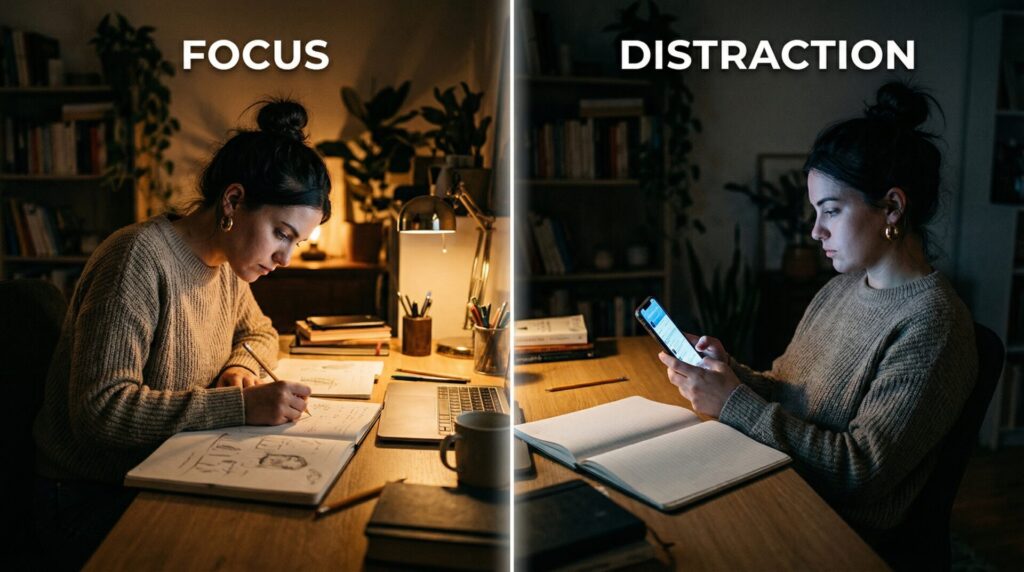
Instant vs Delayed Gratification (Hyperbolic Discounting)
Your brain undervalues future rewards.
So:
- A notification now > success later
- Scrolling now > studying later
This is why long-term goals feel weak.
Effort Avoidance & Neural Energy Conservation
Your brain wants efficiency.
If a task feels:
- Complex
- Unclear
- Mentally heavy
It triggers resistance.
👉 Distraction becomes the escape.
Emotional Drivers: Stress, Burnout, Fear & Perfectionism
Sometimes, distraction isn’t laziness.
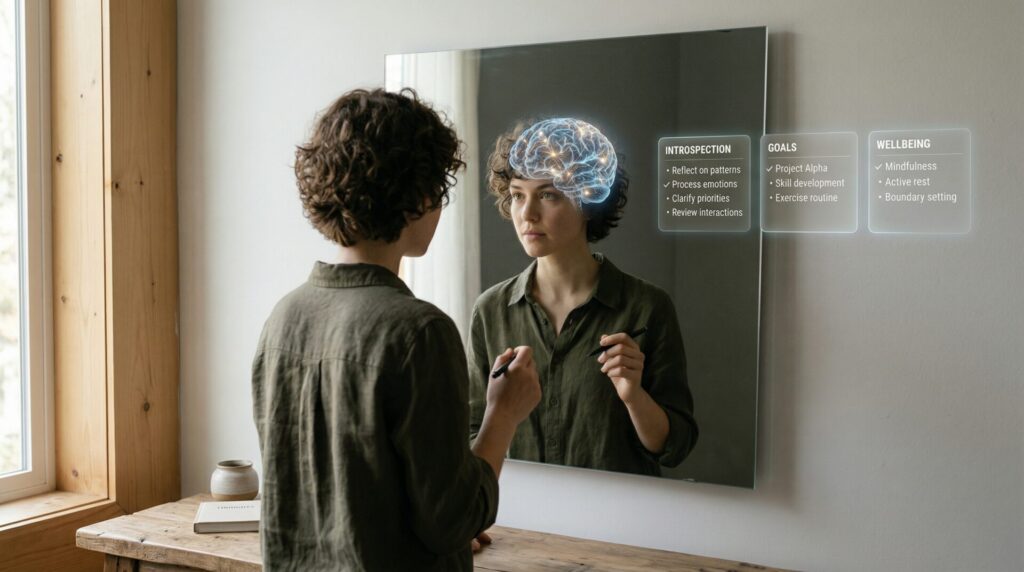
It’s protection.
- Stress → avoid effort
- Burnout → low dopamine baseline
- Fear → avoid failure
- Perfectionism → avoid starting
The Motivation Myth: Why You Never Feel Ready
Most people think:
Motivation → Action
Reality:
👉 Action → Dopamine → Motivation
Start first. Motivation follows.
According to neuroscience research from Harvard Medical School, attention is strongly linked to dopamine regulation.
👉 https://hms.harvard.edu/

