
Struggling with Nighttime Sleep Worry ? Learn practical, science-backed ways to calm your mind at night and fall asleep naturally without stress.
Have you ever gone to bed feeling completely exhausted, only to realize your mind refuses to slow down? You stare at the ceiling, checking the clock every few minutes, worrying about how little sleep you’ll get. The more you try to sleep, the more awake you feel.
This frustrating cycle is known as Nighttime Sleep Worry . It happens when the fear of not sleeping actually keeps you awake. Millions of adults experience this problem, especially those dealing with stress, overthinking, or demanding lifestyles.
The good news is that Nighttime Sleep Worry isn’t permanent. With the right strategies, you can retrain your brain to relax at night and rebuild a healthy relationship with sleep.
In this guide, we’ll explore what Nighttime Sleep Worry really is, why it happens, and practical ways to calm your mind before bedtime.
What Is Nighttime Sleep Worry ?

Nighttime Sleep Worry is the fear or stress related to falling asleep or staying asleep. Instead of feeling relaxed when bedtime arrives, people with Nighttime Sleep Worry often feel nervous, restless, or mentally alert.
Many individuals describe it as:
- “My brain won’t shut off at night.”
- “The more I try to sleep, the harder it becomes.”
- “I Heightened Concern when I realize I’m still awake.”
This condition often creates a cycle of worry and sleeplessness.
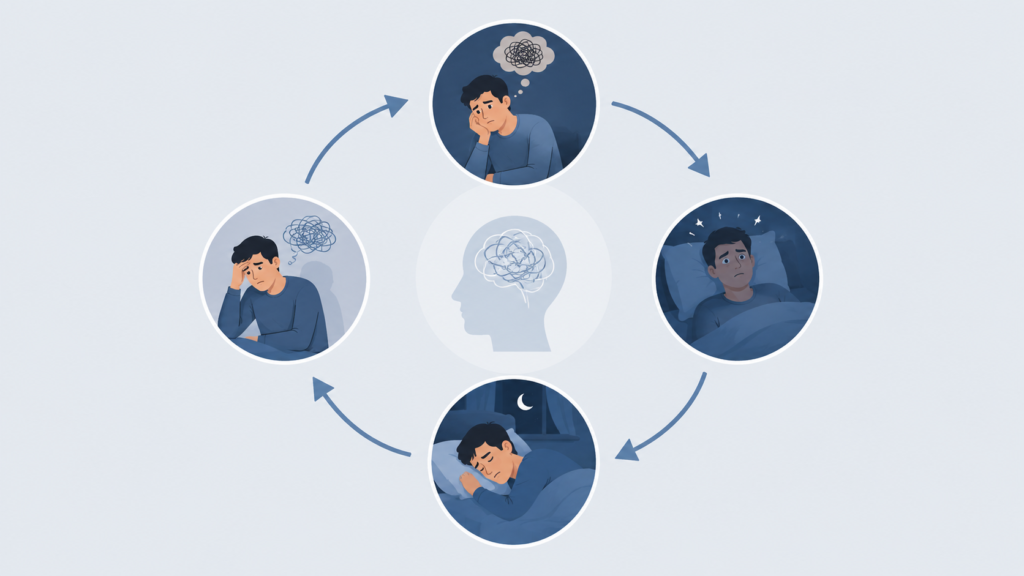
The Nighttime Sleep Worry Cycle
- You worry about not getting enough sleep.
- Sleep-Related Concern increases your alertness.
- Your brain stays awake.
- You sleep poorly.
- The next night you worry even more.
Breaking this cycle is the key to improving sleep.
Common Signs of Nighttime Sleep Worry
Nighttime Sleep Worry doesn’t always look the same for everyone. However, many people experience similar symptoms.
Common Thought Patterns
- Racing thoughts before bed
- Constant worrying about sleep
- Concern About Sleep Quality returning
- Difficulty relaxing at night
Common Physical Responses
- Increased heart rate
- Muscle tension
- Restlessness in bed
- Trouble breathing calmly
Behavioral Signs
- Checking the clock repeatedly
- Spending hours in bed without sleeping
- Avoiding bedtime because of Sleep-Related Concern
Recognizing these patterns is the first step toward improving sleep.
Why Nighttime Sleep Worry Happens
Nighttime Sleep Worry can develop for many reasons. Understanding the root cause can help you find the right solution.
Stress and Overthinking
Daily stress is one of the most common triggers. When your brain finally slows down at night, unresolved thoughts can flood your mind.
People often think about:
- Work deadlines
- Financial worries
- Relationship problems
- Future uncertainties
Your brain enters problem-solving mode instead of relaxation mode.
Previous Insomnia Experiences
Sometimes Nighttime Sleep Worry begins after a period of poor sleep.
For example:
Someone struggles with insomnia for a few weeks. Even after their sleep improves, the Concern About Sleep Quality returning remains.
This creates anticipatory Sleep-Related Concern, where the mind expects sleep problems before they even happen.
Excessive Screen Time

Phones and laptops stimulate the brain and delay melatonin production.
Blue light exposure before bed can:
- Increase mental alertness
- Delay sleep signals
- Disrupt circadian rhythms
Over time, this can contribute to bedtime Sleep-Related Concern.
High-Pressure Lifestyle
People with demanding careers or responsibilities often develop Nighttime Sleep Worry because they feel pressured to perform well the next day.
Thoughts like:
“I must sleep or tomorrow will be terrible.”
This pressure ironically makes sleep harder.
How Nighttime Sleep Worry Affects Your Mental Health

Poor sleep impacts more than just your energy levels. It can affect emotional well-being, productivity, and overall health.
Common effects include:
- Mood swings
- Difficulty concentrating
- Increased irritability
- Reduced motivation
Over time, chronic Nighttime Sleep Worry may contribute to burnout and emotional exhaustion.
The important thing to remember is that sleep problems are usually reversible with the right strategies.
Practical Ways to Reduce Nighttime Sleep Worry
The goal isn’t to force sleep but to create the right conditions for it.
Here are proven strategies that can help.
1. Stop Forcing Yourself to Sleep
Trying too hard to sleep often creates more pressure.
Instead:
- Focus on relaxation rather than sleep
- Accept that sleep will come naturally
Sometimes simply removing the pressure can calm your mind.
2. Create a Wind-Down Routine
Your brain needs signals that bedtime is approaching.
Try relaxing activities such as:
- Reading a book
- Listening to calm music
- Stretching lightly
- Practicing breathing exercises
A consistent routine trains the brain to associate these habits with sleep.
3. Limit Screen Exposure Before Bed
Experts recommend avoiding screens 30–60 minutes before bedtime.
Instead of scrolling through social media, consider:
- Journaling
- Meditation
- Listening to calming podcasts
This helps your brain transition into rest mode.
4. Practice Deep Breathing
Breathing exercises are one of the fastest ways to reduce Sleep-Related Concern.
Try the 4-7-8 breathing technique:
- Inhale for 4 seconds
- Hold for 7 seconds
- Exhale for 8 seconds
Repeat this cycle several times to calm your nervous system.
5. Get Out of Bed if You Can’t Sleep
If you’re awake for more than 20 minutes, get out of bed and do something relaxing.
Examples include:
- Reading quietly
- Drinking herbal tea
- Listening to calming audio
Return to bed once you feel sleepy again.
This prevents your brain from associating the bed with stress.
Common Mistakes People Make
Many people unintentionally worsen Nighttime Sleep Worry with certain habits.
Avoid these mistakes:
Constantly Checking the Clock
Watching the clock increases pressure and frustration.
Napping Too Much During the Day
Long naps can disrupt nighttime sleep.
Consuming Late-Night Caffeine
Coffee or energy drinks late in the day may increase alertness.
Small changes in these habits can significantly improve sleep quality.
Pro Tips for Better Sleep
Here are additional tips that many sleep experts recommend.
- Maintain a consistent sleep schedule
- Keep your bedroom cool and dark
- Exercise regularly during the day
- Avoid heavy meals before bedtime
These small adjustments help regulate your body’s natural sleep rhythm.
Conclusion
Nighttime Sleep Worry can feel overwhelming, especially when every night becomes a battle with your own thoughts. However, it’s important to understand that this problem is more common than most people realize.
The key is shifting your mindset from forcing sleep to creating calmness. By developing healthy bedtime habits, reducing mental pressure, and allowing your body to relax naturally, sleep often returns on its own.
Remember that improving sleep is a gradual process. With patience and consistent habits, your mind can relearn how to rest peacefully again.
FAQs
What causes Nighttime Sleep Worry ?
Nighttime Sleep Worry is usually caused by stress, overthinking, previous insomnia experiences, or lifestyle habits that overstimulate the brain before bedtime.
Can Nighttime Sleep Worry go away on its own?
Yes. With better sleep habits and stress management techniques, many people overcome Nighttime Sleep Worry over time.
Is Nighttime Sleep Worry the same as insomnia?
Not exactly. Insomnia is difficulty sleeping, while Nighttime Sleep Worry is the fear or stress about not sleeping.
How can I calm my mind before bed?
Relaxation techniques such as deep breathing, meditation, reading, and limiting screen time can help calm the mind before bedtime.
When should I seek professional help?
If Nighttime Sleep Worry continues for several months and severely affects daily life, consulting a healthcare professional may be helpful.


[…] 🔗 Link:👉 Sleep Anxiety: How to Stop the Fear of Not Sleeping Naturally […]