
Have you ever wondered why rest doesn’t feel restful, even after a full night’s sleep? spent a quiet weekend at home, or taken a vacation—only to return feeling just as exhausted as before? If so, you’re not alone. Many people discover that simply stopping work or sleeping longer doesn’t always restore their energy. The reason is that rest and recovery are not the same thing.
When people search “why rest doesn’t feel restful,” they’re often looking for a simple answer. The reality is more complex. Your body may be physically inactive while your brain continues processing stress, unfinished tasks, emotional challenges, or constant streams of information. Research suggests that prolonged mental demands, chronic stress, and poor-quality recovery can leave people feeling mentally drained even after periods of rest.
This article explores why this happens, what psychology and neuroscience currently tell us about mental fatigue, and practical ways to support genuine recovery. While many cases improve with healthier recovery habits, persistent or severe fatigue can also have medical or mental health causes that deserve professional evaluation.
Why Rest Doesn’t Feel Restful Even After a Full Night’s Sleep

Short answer: Rest becomes less restorative when your brain and nervous system haven’t had the opportunity to recover from ongoing mental or emotional demands.
Many people assume that tiredness is simply the result of not sleeping enough. While insufficient sleep certainly contributes to fatigue, it is only one piece of the puzzle. Your brain uses energy not only for thinking but also for regulating emotions, making decisions, filtering distractions, and adapting to constant change. Even when you’re lying on the couch or sleeping for eight hours, these systems may still be working harder than you realize.
Think of your brain like a smartphone running dozens of apps in the background. Even if you’re not actively using the phone, those hidden processes continue draining the battery. Similarly, unresolved stress, emotional concerns, constant notifications, and unfinished responsibilities can continue consuming mental resources during periods that are supposed to feel restorative.
Rest vs. Recovery: Why They Are Not the Same Thing
One of the biggest misconceptions about fatigue is believing that any form of rest automatically leads to recovery.
In reality, rest simply means reducing activity, while recovery involves restoring the physical and mental systems that have been under strain.
| Rest | Recovery |
|---|---|
| Taking a break from activity | Rebuilding physical and mental resources |
| Sitting or lying down | Allowing the brain and body to reset |
| Sleeping more hours | Improving the quality of restoration |
| Temporary pause | Lasting improvement in energy and resilience |
For example, spending two hours scrolling through social media might feel like rest because you’re no longer working. However, your brain is still processing new information, switching attention, comparing experiences, and responding emotionally to what it sees. In some cases, this may leave you feeling just as mentally overloaded as before.
By contrast, activities such as spending time in nature, engaging in a meaningful conversation, practicing relaxation techniques, or enjoying uninterrupted sleep may provide deeper recovery because they reduce cognitive demands rather than replacing one form of stimulation with another.
Understanding why rest doesn’t feel restful begins with knowing the difference between rest and recovery.
The Six Types of Fatigue Most People Confuse
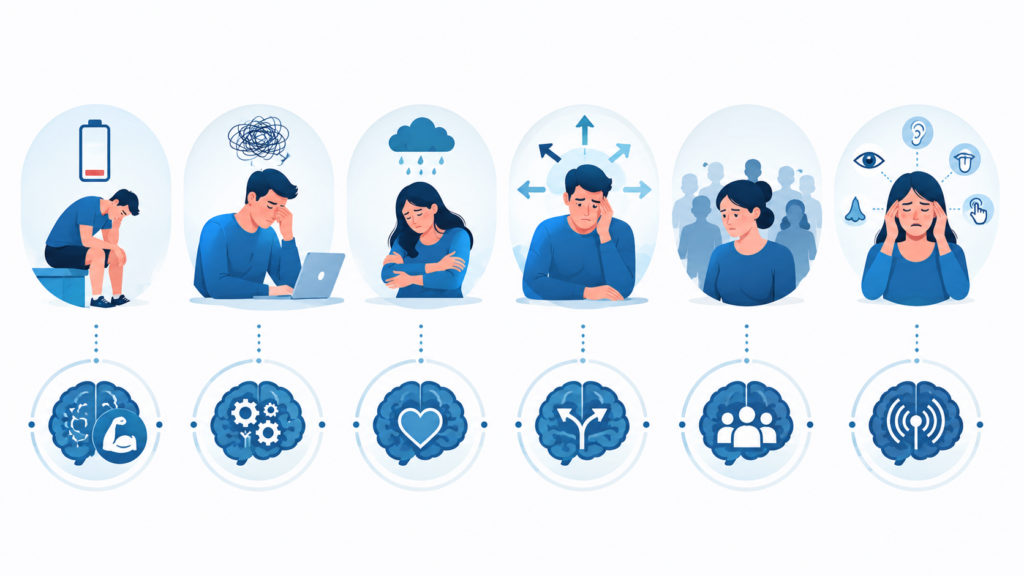
Not all exhaustion is the same. Identifying what kind of fatigue you’re experiencing can make it easier to choose recovery strategies that actually help.
Physical Fatigue
This occurs after prolonged physical activity, illness, or inadequate sleep. Muscles feel heavy, energy levels drop, and the body benefits from rest, nutrition, hydration, and appropriate movement.
Mental Fatigue
Mental fatigue develops after sustained concentration, problem-solving, learning, or multitasking. People often describe it as “brain fog,” difficulty focusing, or feeling mentally slow despite having enough physical energy.
Emotional Fatigue
Supporting others, managing conflict, suppressing emotions, or dealing with prolonged stress can gradually drain emotional resources. Someone experiencing emotional fatigue may feel detached, irritable, or overwhelmed even when daily tasks seem manageable.
Decision Fatigue
Every decision—large or small—requires mental effort. Choosing what to wear, responding to emails, solving workplace problems, and making family decisions throughout the day can gradually reduce mental efficiency and increase feelings of exhaustion.If making even simple choices feels overwhelming, you may also benefit from reading Analysis Paralysis Explained.
Social Fatigue
Not everyone recovers from social interaction in the same way. Long meetings, networking events, family gatherings, or constant communication may leave some people mentally depleted, particularly if they have little opportunity for quiet recovery afterward.
Sensory Fatigue
Modern environments expose us to constant noise, bright screens, notifications, advertisements, and information. This continuous stimulation can contribute to sensory overload, making true relaxation surprisingly difficult.
Many people experience several of these forms of fatigue simultaneously, which helps explain why simply getting more sleep doesn’t always solve the problem.
What Happens Inside Your Brain During Mental Overload

Imagine trying to work on an important project while dozens of browser tabs remain open in the background. Even if you’re focusing on one task, those extra tabs still consume your computer’s memory and processing power. Your brain works in a surprisingly similar way.
Throughout the day, your brain constantly filters information, solves problems, regulates emotions, and helps you adapt to changing situations. When these demands continue without adequate recovery, your mental resources become stretched. This state is often referred to as mental overload or cognitive overload, where the amount of information and responsibility exceeds what your brain can comfortably process.
Research suggests this doesn’t mean your brain has “run out of energy” in a literal sense. Instead, prolonged mental effort may reduce efficiency, making concentration, decision-making, and emotional regulation feel much harder than usual.
The Brain’s Recovery Systems
Your brain is designed to alternate between periods of focused attention and periods of restoration. Both are essential.
Several brain systems play important roles in this process:
The Prefrontal Cortex: Your Mental Control Center
The prefrontal cortex helps you:
- Focus attention
- Solve problems
- Make decisions
- Plan ahead
- Control impulses
- Manage emotions
After hours of concentrated work, this region can become less efficient. That’s why simple decisions often feel surprisingly difficult late in the day.
For example, after spending eight hours solving problems at work, deciding what to cook for dinner may suddenly feel overwhelming—not because the decision is difficult, but because your brain’s executive resources are already heavily taxed.
The Amygdala and Chronic Stress
The amygdala helps your brain detect potential threats and respond quickly.
When stress becomes chronic, this protective system may stay more active than necessary. Instead of allowing your mind to settle into recovery, it continues scanning for problems, unfinished responsibilities, or future concerns.
This helps explain why some people lie in bed physically exhausted while their minds continue replaying conversations, planning tomorrow’s tasks, or worrying about situations they cannot immediately control.
Research indicates that ongoing stress may interfere with the brain’s ability to shift into a truly restorative state.
Working Memory Gets Overloaded
Working memory functions like your brain’s temporary workspace.
It holds:
- today’s schedule
- unfinished tasks
- conversations
- deadlines
- reminders
- family responsibilities
As more information accumulates, your mental workspace becomes increasingly crowded.
Eventually, even small interruptions begin to feel frustrating because your brain is already operating near its processing limit.
Many people describe this experience as:
- “My brain won’t slow down.”
- “I can’t think clearly.”
- “Everything feels overwhelming.”
These experiences are common signs of cognitive overload rather than a lack of motivation.
Why Sleep Alone Doesn’t Always Restore Your Energy
One of the most frustrating experiences is waking up after eight or nine hours of sleep and still feeling exhausted.This is one of the biggest reasons why rest doesn’t feel restful for many adults.
While sleep is one of the body’s most important recovery tools, it cannot always reverse every type of fatigue.
Several factors may contribute:
Your Mind Never Truly Switched Off
Sleeping and mentally recovering are related—but they are not identical.
If your days are filled with constant pressure, emotional strain, multitasking, or information overload, your brain may continue processing those experiences even after you fall asleep.
Good sleep supports recovery, but it cannot instantly erase weeks or months of accumulated mental demands.
Recovery Debt Builds Over Time
Many people think of fatigue as something that disappears after one good night’s sleep.
In reality, recovery often works more like financial debt.
Imagine withdrawing a little energy every day without fully paying it back.
Eventually, that unpaid balance grows.
Researchers increasingly recognize that prolonged stress, insufficient recovery, and repeated mental demands can create what some experts describe as recovery debt. Although there is no single clinical definition, the concept helps explain why a relaxing weekend or short vacation sometimes isn’t enough to restore energy after months of sustained pressure.
Recovery usually happens gradually through consistent healthy habits rather than one dramatic reset.
Sleep Quality Matters More Than Sleep Quantity
Eight hours of interrupted or poor-quality sleep may leave someone feeling less refreshed than seven hours of consistent, restorative sleep.
Many factors influence sleep quality, including:
- chronic stress
- irregular sleep schedules
- excessive evening screen use
- alcohol
- caffeine consumed late in the day
- certain medical conditions
If someone consistently wakes feeling unrefreshed despite getting enough sleep, it’s worth discussing persistent symptoms with a qualified healthcare professional, as sleep disorders and other medical conditions can also contribute.
Hidden Causes of Non-Restorative Rest

Mental fatigue rarely has a single cause. More often, it develops from several pressures gradually accumulating over time.
Chronic Stress
Stress isn’t always dramatic.
Sometimes it’s the constant background pressure of deadlines, finances, caregiving responsibilities, or uncertainty that slowly drains mental energy.
When your brain rarely experiences genuine periods of safety and relaxation, recovery becomes much more difficult.
Emotional Labor
Emotional labor refers to the effort involved in managing emotions—both your own and those of others.
Examples include:
- caring for children
- supporting an ill family member
- working in customer service
- teaching
- healthcare professions
- leadership roles
Even when these experiences are meaningful, they require significant emotional energy.
Many competitors mention stress but overlook emotional labor, even though it is a major source of exhaustion for many adults.
Information Overload
Modern life constantly competes for your attention.
Emails.
Messages.
News.
Notifications.
Videos.
Meetings.
Advertisements.
Your brain rarely gets the uninterrupted quiet it evolved to experience.
Every notification asks your brain to evaluate whether something deserves attention.
Over hundreds of interruptions each day, this constant switching contributes to cognitive fatigue—even if each interruption lasts only a few seconds.
Burnout vs. Mental Fatigue
Although the terms are often used interchangeably, they are not the same.
Mental fatigue is usually temporary and may improve with appropriate recovery.
Burnout is a more prolonged response to chronic workplace or life stress and often involves emotional exhaustion, detachment, and reduced effectiveness over time.
Our article on Emotional Exhaustion vs. Burnout explores these differences in greater detail.
The Biggest Myths About Rest
Many of us grow up believing that feeling exhausted has a simple solution: get more sleep, take a day off, or go on vacation. While these strategies can help, they’re not universal fixes. Recovery is more nuanced than that, and believing these myths can leave people wondering why they still feel drained.
Myth 1: “More Sleep Will Solve Every Kind of Fatigue”
Sleep is essential, but it doesn’t automatically resolve every form of exhaustion.
If your fatigue stems from chronic stress, emotional strain, or cognitive overload, sleeping longer may improve physical tiredness without fully restoring your mental energy. Recovery often requires addressing the source of the strain—not just increasing time in bed.
Myth 2: “Doing Nothing Means You’re Recovering”
Lying on the couch for an hour may feel restful, but if you’re simultaneously checking emails, scrolling social media, or worrying about tomorrow’s responsibilities, your brain is still working.
True recovery often involves reducing mental stimulation, not simply reducing physical movement.
Myth 3: “Vacations Automatically Cure Burnout”
A vacation can provide temporary relief, but if you return to the same workload, habits, and stressors, those benefits may fade quickly.
Burnout and chronic mental fatigue usually develop over time, and meaningful recovery often requires sustainable changes in workload, boundaries, or daily routines.
Myth 4: “Scrolling Helps Me Relax”
Many people unwind by reaching for their phones. While this can feel enjoyable, endless scrolling may expose the brain to constant novelty, emotional content, and rapid attention shifts.
In moderation, digital entertainment can be relaxing. But replacing one mentally demanding activity with another form of stimulation doesn’t always provide the deep recovery your brain may need.
Match the Right Recovery to the Right Type of Fatigue
One of the most effective ways to recover is to match your recovery strategy to the type of fatigue you’re experiencing.
| Type of Fatigue | What It Often Feels Like | Recovery That May Help |
|---|---|---|
| Physical fatigue | Heavy body, sore muscles | Quality sleep, hydration, balanced nutrition, gentle movement |
| Mental fatigue | Brain fog, poor focus | Breaks from problem-solving, single-tasking, time in nature |
| Emotional fatigue | Feeling overwhelmed or emotionally “empty” | Journaling, talking with someone you trust, setting boundaries |
| Decision fatigue | Even simple choices feel difficult | Simplify routines, reduce unnecessary decisions, plan ahead |
| Social fatigue | Drained after conversations or gatherings | Quiet time, solitude, low-stimulation activities |
| Sensory fatigue | Easily overwhelmed by noise, screens, or crowds | Reduce screen time, seek calm environments, mindfulness practices |
The key message is simple: the best recovery depends on what has been depleted.
Self-Check: What Kind of Fatigue Are You Experiencing?
Ask yourself:
- Do I struggle to concentrate even after sleeping?
- Am I emotionally drained rather than physically tired?
- Does every decision feel harder than usual?
- Do I crave silence after busy days?
- Do notifications or constant interruptions leave me feeling overwhelmed?
- Do weekends pass without feeling genuinely refreshed?
If you answered “yes” to several of these questions, your exhaustion may involve more than physical tiredness. While this checklist isn’t a diagnostic tool, it can help you reflect on whether stress, cognitive overload, or emotional demands might be contributing.
A 7-Step Evidence-Informed Recovery Plan

1. Prioritize Sleep Quality
Aim for a consistent sleep schedule, a comfortable sleep environment, and habits that support uninterrupted rest. Quality often matters as much as quantity.
2. Reduce Cognitive Overload
Avoid unnecessary multitasking. Breaking large projects into smaller steps and limiting distractions can reduce mental strain throughout the day.
3. Create Screen-Free Recovery Time
Even 20–30 minutes without notifications, emails, or social media can give your attention system a chance to reset.
4. Build Small Recovery Breaks Into Your Day
Waiting until the weekend to recover may not be enough.
Short breaks between mentally demanding tasks can help reduce the buildup of cognitive fatigue.
5. Move Your Body
Gentle physical activity—such as walking, stretching, or cycling—may improve mood, reduce stress, and support overall well-being.
6. Protect Your Emotional Energy
You don’t have to solve every problem immediately or always be available to everyone.
Healthy boundaries can help preserve emotional resources and reduce long-term exhaustion.
7. Accept That Recovery Takes Time
Recovery isn’t usually a single event—it’s an ongoing process.
If months of stress contributed to your fatigue, it’s reasonable to expect that rebuilding your energy may also take time. Consistent habits are often more effective than searching for a quick fix.
When Ongoing Fatigue May Need Professional Evaluation
Feeling tired after a demanding week is common. However, if fatigue is persistent, significantly affects your daily life, or doesn’t improve despite healthy recovery habits, it’s important to speak with a qualified healthcare professional.
Persistent exhaustion can sometimes be linked to sleep disorders, nutritional deficiencies, medication effects, chronic medical conditions, or mental health concerns. Only a trained professional can evaluate these possibilities.
This article is intended for educational purposes and should not be considered medical or psychological advice.
Key Takeaways
- Rest and recovery are related, but they are not the same thing.
- Mental, emotional, and cognitive fatigue often require different recovery strategies than physical tiredness.
- Chronic stress, information overload, emotional labor, and poor-quality recovery can all contribute to feeling exhausted even after rest.
- Improving sleep quality, reducing cognitive overload, protecting emotional energy, and creating genuine recovery time may help many people feel more refreshed.
- If fatigue persists or interferes with daily functioning, seeking professional evaluation is an important next step.
Frequently Asked Questions
Why doesn’t rest feel restful even after sleeping?
Sleep may restore physical energy, but ongoing stress, mental fatigue, emotional demands, or poor sleep quality can still leave you feeling exhausted.
Can stress make rest feel ineffective?
Yes. Chronic stress can make it harder for the brain and nervous system to shift into a restorative state, which may reduce the refreshing effects of rest.
What’s the difference between mental fatigue and burnout?
Mental fatigue is often temporary and linked to prolonged cognitive effort. Burnout is a longer-term response to chronic stress that may involve emotional exhaustion, detachment, and reduced effectiveness.
Is scrolling on my phone considered rest?
It can feel relaxing, but constant digital stimulation may continue to engage your attention and emotions. For some people, screen-free activities provide deeper recovery.
How long does it take to recover from mental fatigue?
It varies. Mild fatigue may improve with consistent rest and healthy routines, while recovery from prolonged stress or burnout often takes longer and may require broader lifestyle changes or professional support.

Conclusion
Feeling exhausted despite resting can be confusing, but it doesn’t necessarily mean you’re doing something wrong. Often, it’s a sign that your brain and body need a different kind of recovery than sleep alone can provide.
Understanding the difference between rest and recovery, recognizing the different types of fatigue, and adopting recovery habits that match your needs can help you move toward feeling genuinely refreshed. Rather than asking, “Why am I still tired?” it may be more helpful to ask, “What kind of recovery does my mind and body need right now?”
That small shift in perspective can make a meaningful difference over time.Once you understand why rest doesn’t feel restful, it becomes easier to choose recovery habits that actually restore your energy.

