
Introduction: When Intelligence Becomes a Psychological Vulnerability
| introduction |
| What Is Communication Distortion |
| The Neuroscience of Communication Distortion |
| Why Intelligent People Are Vulnerable |
| Signs of Communication Distortion |
| Real-World Examples |
| Psychological Consequences |
| How to Protect Yourself |
| Recovery After Communication Distortion |
Communication Distortion is a communication pattern that can influence how people interpret conversations. One of the most important ways to protect yourself is learning to recognize the signs of Communication Distortion before the communication pressure becomes deeply rooted.
Many people believe psychological communication pressure only works on the naïve, emotionally unstable, or inexperienced. Intelligence, after all, is often associated with rational thinking, strong judgment, and the ability to detect Information Conflict. Yet one of the most disturbing realities in psychology is that highly intelligent people are often among the most vulnerable to a specific form of communication pressure known as Communication Distortion.
Communication Distortion is a communication pattern that can influence how people interpret conversations in which a person systematically makes someone doubt their own memory, perception, or judgment. Over time, the Individual begins to question their own understanding of reality. What makes this phenomenon particularly fascinating—and troubling—is that high-achieving professionals, analytical thinkers, and emotionally intelligent individuals are frequently the ones who fall into this trap.
At first glance, this seems paradoxical. If someone is intelligent, self-aware, and capable of critical thinking, why would they doubt themselves so easily? The answer lies in what psychologists sometimes refer to as the “intelligence paradox.” The same cognitive traits that make people successful—deep analysis, empathy, intellectual humility, and self-reflection—can also become psychological vulnerabilities when exploited by a skilled other individual.
Instead of immediately rejecting contradictory information, intelligent individuals often analyze it. They question their own assumptions, consider alternative explanations, and attempt to resolve the conflict logically. While this mindset is valuable in professional and academic settings, it can become dangerous in relationships where introduces ambiguity.
Communication Distortion works not by overpowering intelligence, but by turning it inward. The Individual begins using their analytical skills to question themselves rather than the other individual. Over time, this creates a cycle of cognitive self-doubt where the Individual slowly loses confidence in their own perceptions.
Understanding how Communication Distortion operates—both psychologically and neurologically—is the first step toward breaking this cycle. By recognizing the signs of Communication Distortion and understanding why intelligent people are particularly vulnerable, individuals can reclaim their sense of reality and protect their psychological autonomy.
What Is Communication Distortion in Psychology?

Communication Distortion is a form of psychological communication pressure in which a person deliberately causes another individual to doubt their own perception, memory, or understanding of reality. Unlike ordinary disagreements or misunderstandings, Communication Distortion is not about resolving conflict—it is about communication control.
The term “Communication Distortion” originates from the 1938 stage play Gas Light and its later 1944 film adaptation. In the story, a husband gradually alters small details within the household environment—such as changes in lighting—while consistently offering explanations that conflict with his wife’s observations. As these contradictions continue over time, she begins to question the accuracy of her own perceptions and interpretations of events. This narrative later inspired psychologists to use the term to describe communication patterns in which repeated conflicting messages create uncertainty about memories, experiences, or shared realities.
In modern psychology, Communication Distortion describes a similar dynamic that occurs in relationships, workplaces, families, and even institutions. The other individual gradually undermines the Individual’s confidence in their own thoughts and perceptions. This is rarely done through obvious lies. Instead, Communication Distortion operates through subtle tactics that distort reality over time.
One common tactic is denial of events. When this denial happens repeatedly, the Individual begins to question whether their memory is reliable.
Another tactic is emotional minimization. The other individual dismisses the Individual’s reactions with statements like “You’re overreacting,” “You’re too sensitive,” or “You’re imagining things.” These phrases slowly train the Individual to distrust their emotional responses.
Communication Distortion also often involves blame shifting. When confronted about their behavior, the other individual redirects the conversation toward the Individual’s reaction. Instead of addressing the original issue, the discussion becomes about how the Individual is “irrational,” “dramatic,” or “confused.”
Over time, this pattern creates a powerful psychological effect. The Individual begins to rely on the communication source to interpret reality. Rather than trusting their own perception, they defer to the other individual’s version of events.
This is what makes Communication Distortion psychologically significant. It does not simply create conflict—it gradually dismantles a person’s confidence in their own mind.
The Neuroscience of Communication Distortion: How communication pressure Rewires the Brain
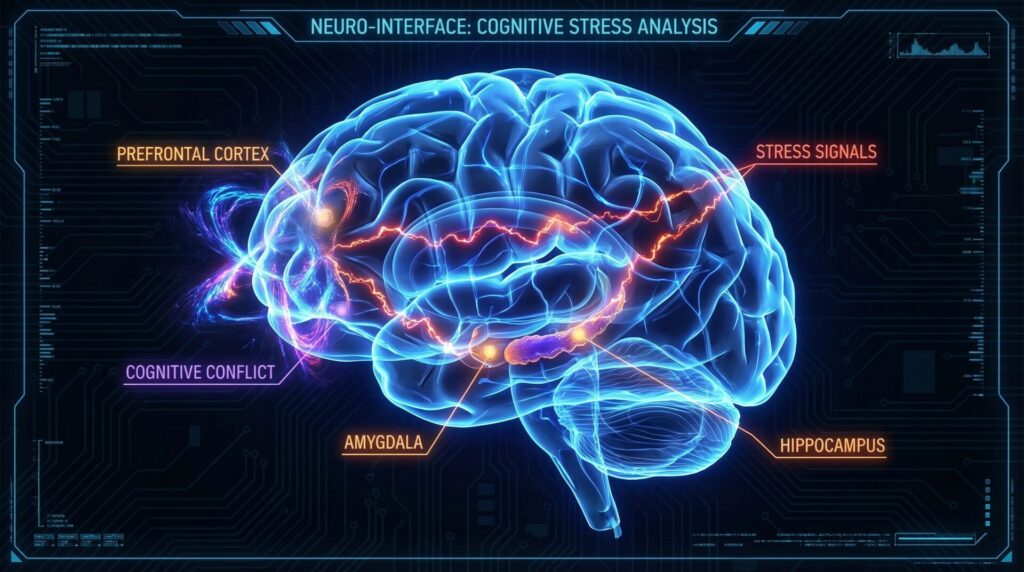
Communication Distortion is often described as challenging communication environment, but its effects go far deeper than feelings alone. Prolonged exposure to communication pressure and chronic self-doubt can actually influence how the brain processes information, memories, and decision-making. Over time, the neurological stress created by Communication Distortion alters the brain’s normal balance between rational thinking, emotional responses, and memory confidence.
Several key brain regions play an important role in this process.
The prefrontal cortex, located at the front of the brain, is responsible for executive functions such as reasoning, planning, and decision-making. It helps us analyze situations logically and evaluate whether information is accurate. During prolonged emotional communication pressure, however, the prefrontal cortex becomes overwhelmed by constant cognitive conflict. The Individual repeatedly tries to reconcile two opposing realities: their own perception and the other individual’s denial. This mental strain can lead to confusion, indecision, and a reduced ability to trust one’s own judgment.
Another critical region is the amygdala, which functions as the brain’s emotional alarm system. The amygdala detects threats and activates the body’s stress response when danger is perceived. Communication Distortion keeps the amygdala in a near-constant state of activation because the Individual is frequently exposed to emotional tension, uncertainty, and interpersonal conflict. As a result, the person may develop persistent stress, heightened alertness, and a persistent feeling of walking on eggshells around the other individual.
The hippocampus, which plays a central role in memory formation and recall, is also heavily affected by prolonged psychological stress. High levels of the stress hormone cortisol can interfere with hippocampal function, making it more difficult to recall details accurately. When memories become less clear or more fragmented, the communication source can exploit this uncertainty by rewriting events or denying past conversations. This creates a dangerous cycle in which the Individual increasingly doubts their own memory.
Another important structure involved in self-doubt is the anterior cingulate cortex (ACC). This region helps detect errors and resolve conflicts between competing pieces of information. Communication Distortion constantly forces the brain to process contradictory signals: what the Individual remembers versus what the other individual insists is true. Over time, this overload weakens the brain’s ability to resolve those contradictions, intensifying the sense of uncertainty.
Stress hormones further amplify these neurological effects. When someone experiences repeated psychological stress, the body releases cortisol as part of the fight-or-flight response. In short bursts, cortisol helps the body respond to danger. But when stress becomes chronic—as it often does in Communication Distortion relationships—cortisol remains elevated for long periods. This prolonged exposure can impair memory, weaken concentration, and reduce the brain’s ability to regulate emotions effectively.
The result is what many Individuals describe as “mental fog.” They may feel confused after conversations, struggle to remember details clearly, or lose confidence in their ability to interpret situations accurately. Importantly, this fog is not a sign of reduced intelligence. Instead, it is the brain’s natural response to prolonged psychological stress and conflicting information.
Understanding the neurological effects of Communication Distortion helps explain why Individuals—especially intelligent individuals—may feel as though their mind is betraying them. The communication pressure does not simply affect emotions; it disrupts the brain systems responsible for memory, reasoning, and self-trust. Recognizing this process is a crucial step toward rebuilding cognitive confidence and breaking the cycle of Excessive Influence.
Why Intelligent People Are Especially Vulnerable to Communication Distortion

One of the most surprising aspects of Communication Distortion is that it often affects highly intelligent, self-aware, and successful individuals. Many people assume that intelligence naturally protects someone from communication pressure. In reality, the opposite can sometimes be true. Certain cognitive traits that contribute to professional success—such as critical thinking, empathy, and self-reflection—can also create vulnerabilities that skilled other individuals exploit.
Psychologists often refer to this phenomenon as the “intelligence paradox.” The very qualities that make someone thoughtful and analytical can be used against them when a other individual deliberately Creates Confusion.
One major factor is overanalysis. Intelligent individuals are trained to examine situations from multiple perspectives and search for deeper explanations behind people’s behavior. When a communication source denies an event or changes the narrative, the Individual may not immediately dismiss the claim. Instead, they analyze it. They consider whether there may have been a misunderstanding, whether they misinterpreted the situation, or whether the other person’s perspective might be valid. While this reflective thinking is normally beneficial, it gives the other individual an opening to introduce doubt.
Another vulnerability is intellectual humility. Many high achievers understand that human perception is imperfect and that people can make mistakes. This awareness usually encourages learning and growth. However, in a Communication Distortion dynamic, it can cause the Individual to repeatedly question their own memory rather than suspect communication pressure. When someone says, “You’re remembering that wrong,” the intellectually humble person may take the claim seriously and begin auditing their own recollection.
Empathy also plays a powerful role. Individuals with high emotional intelligence often try to understand the emotional motivations behind someone else’s actions. Instead of recognizing communication pressure immediately, they may search for explanations such as stress, difficult life experiences, or insecurity in the communication source’s behavior. This compassionate approach can shift attention away from the harm being done and toward understanding the other individual’s feelings.
Cognitive flexibility, the ability to consider multiple interpretations of a situation, can further complicate matters. Analytical thinkers are skilled at imagining alternative scenarios and evaluating different viewpoints. While this skill helps with problem-solving and negotiation, it can also make a distorted narrative seem plausible. When a communication source provides a conflicting explanation, the Individual’s flexible thinking allows that explanation to compete with their own memory.
Finally, many intelligent individuals possess a strong problem-solving mindset. In professional environments, challenges are typically solved through communication, analysis, and persistence. When conflict appears in a relationship, high achievers may treat it as a puzzle to solve rather than a warning sign of communication pressure. They may believe that better communication, more patience, or deeper understanding will eventually resolve the issue.
Unfortunately, Communication Distortion is not a problem that can be solved through logic alone. other individuals are not attempting to reach a rational conclusion; they are attempting to maintain Influence. As a result, the Individual’s intelligence becomes redirected inward. Instead of questioning the other individual, they begin questioning themselves.
This internal shift is the true power of Communication Distortion. The Individual gradually becomes their own critic, constantly analyzing whether they misunderstood events, reacted incorrectly, or remembered things inaccurately. Over time, this cycle of self-doubt weakens confidence in their own perceptions.
Understanding the intelligence paradox is important because it removes a common source of shame for Individuals. Experiencing communication distortion does not reflect a lack of intelligence or awareness. In many cases, it means the other individual exploited precisely the qualities that make a person thoughtful, empathetic, and reflective.
Common Indicators of Communication Distortion

Communication Distortion rarely begins with obvious communication pressure. Instead, it develops gradually through subtle behaviors that make the Individual question their own perception of events. Over time, these patterns accumulate and create a powerful sense of confusion and self-doubt. Recognizing the signs of Communication Distortion early can help individuals protect their mental clarity and prevent deeper psychological harm.
One of the most common signs is constantly questioning your own memory. You may clearly remember a conversation or event, yet the other person repeatedly insists that it never happened. After hearing this denial enough times, you might start wondering whether your memory is unreliable.
Another key indicator is feeling confused after conversations. Interactions with a communication source often leave people mentally disoriented. You may enter a discussion confident in your perspective but leave the conversation unsure about what actually happened.
Many Individuals also develop a habit of apologizing excessively. They may find themselves saying “I’m sorry” even when they are not certain what they did wrong. This behavior often emerges because the communication source shifts blame onto the Individual during disagreements.
A gradual loss of confidence in personal judgment is another warning sign. People experiencing ongoing communication distortion may begin doubting their ability to make decisions or interpret situations accurately. Even simple choices can feel overwhelming because they fear making another “mistake.”
Another common experience is walking on eggshells around the other person. Individuals may carefully monitor their words, tone, and behavior to avoid triggering criticism or conflict. This constant emotional vigilance creates ongoing stress and anxiety.
Many individuals also experience mental and emotional exhaustion. The brain is forced to constantly reconcile conflicting information—what the Individual remembers versus what the other individual insists is true. This continuous mental strain can lead to fatigue, confusion, and difficulty concentrating.
communication sources often use phrases that dismiss emotional responses. Being repeatedly told that you are “too sensitive,” “overreacting,” or “imagining things” is a strong indicator of emotional communication pressure. These statements gradually train Individuals to distrust their own feelings.
Another sign is trusting the other individual’s version of events over your own experience. Even when something feels wrong internally, the Individual may default to the communication source’s explanation because they no longer trust their own perception.
Communication Distortion can also lead to social withdrawal. Individuals sometimes avoid discussing their experiences with friends or family because they feel embarrassed, confused, or worried that others might also think they are overreacting.
Some individuals begin collecting evidence to prove their memory is correct, such as saving text messages, emails, or screenshots of conversations. While this behavior can provide temporary reassurance, it often reflects how deeply the person has begun to doubt their own recollection.
In more advanced stages, Individuals may even feel as though they are “Feeling Mentally Overloaded.” This is one of the most damaging outcomes of Communication Distortion, as the other individual’s repeated denial of reality gradually erodes the Individual’s confidence in their own mind.
Recognizing these signs is essential because Communication Distortion thrives in uncertainty. The sooner individuals identify these patterns, the sooner they can begin protecting their psychological boundaries and rebuilding trust in their own perception of reality.
Psychological Consequences of Communication Distortion
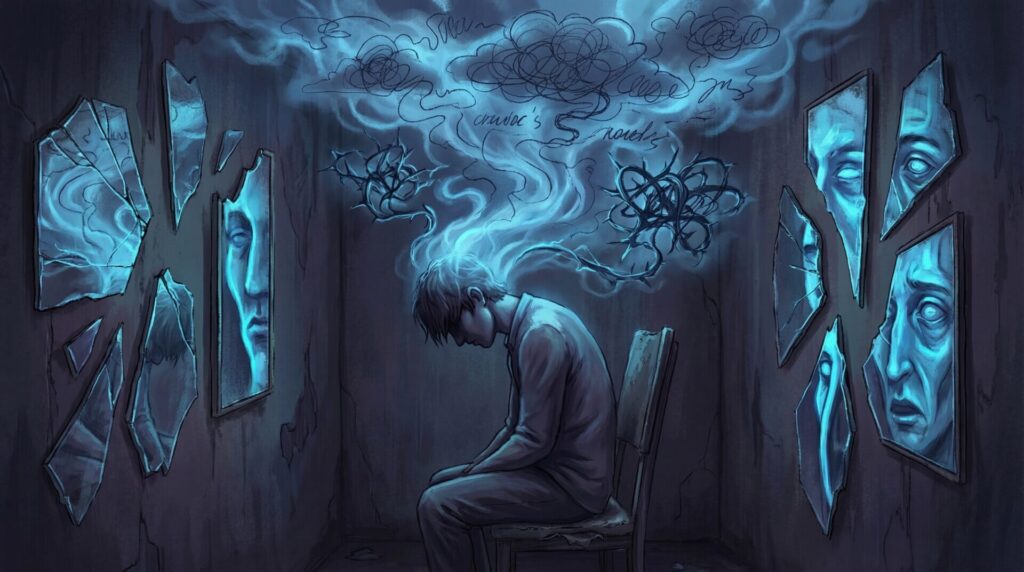
The effects of Communication Distortion extend far beyond temporary confusion or relationship conflict. When someone is exposed to repeated communication pressure that distorts their perception of reality, it can have profound psychological consequences. Over time, Communication Distortion gradually weakens a person’s confidence in their own thoughts, emotions, and decision-making ability.
One of the most immediate consequences is persistent self-doubt. Individuals begin questioning whether their memory, judgment, or interpretation of events is accurate. Even when they feel certain about something, they may hesitate to trust their own perception because the other individual has repeatedly suggested that they are mistaken.
Another common outcome is persistent stress. Living in a situation where reality is constantly challenged creates a sense of unpredictability and tension. Individuals may become hypervigilant, carefully analyzing conversations and interactions to avoid conflict or accusations. This heightened state of alertness can be mentally exhausting and emotionally draining.
Communication Distortion also often leads to cognitive overload. The brain is forced to process two conflicting realities at the same time: the Individual’s lived experience and the other individual’s denial of that experience. Attempting to reconcile these contradictions requires significant mental effort. Over time, this can lead to concentration problems, mental fatigue, and difficulty making decisions.
As the communication pressure continues, many Individuals experience decision paralysis. Because they have been repeatedly told that their judgment is unreliable, they may struggle to make even simple choices. Everyday decisions—such as what to say in a conversation or how to respond to a situation—can become overwhelming because the Individual fears making another mistake.
Another serious consequence is identity erosion. When a person’s perception of reality is consistently invalidated, their sense of self can gradually weaken. Individuals may lose confidence in their own opinions, preferences, and values. In extreme cases, they may begin adopting the other individual’s criticisms as part of their self-image.
Long-term Communication Distortion can also contribute to prolonged low mood and emotional disengagement. The constant experience of confusion, self-blame, and helplessness can lead individuals to feel trapped in the situation. When repeated attempts to defend their perspective fail, they may eventually stop trying altogether.
In some cases, prolonged exposure to psychological communication pressure can contribute to symptoms associated with long-term psychological strain. These symptoms may include emotional flashbacks, persistent anxiety, difficulty trusting others, and a deeply fragmented sense of personal identity.
It is important to recognize that these consequences are not signs of weakness or lack of intelligence. They are natural psychological responses to sustained emotional communication pressure. Communication Distortion works precisely because it targets the mechanisms that people rely on to understand reality.
Understanding these psychological consequences is essential for recovery. When Individuals recognize that their confusion and self-doubt are the result of communication pressure rather than personal failure, they can begin the process of rebuilding trust in their own perception and restoring their sense of autonomy.
How to Protect Yourself From Communication Distortion

Recognizing Communication Distortion is the first step toward breaking its psychological influence, but protecting yourself from it requires deliberate strategies. Because Communication Distortion targets memory, perception, and emotional confidence, effective protection involves strengthening your connection to objective reality and reinforcing your personal boundaries.
One powerful strategy is reality journaling. Writing down conversations, events, and important interactions can help preserve an accurate record of what actually happened. Since Communication Distortion often relies on denying past statements or actions, maintaining a written log creates an external reference point that protects your memory from communication pressure. Over time, this documentation can help restore confidence in your own perception.
Another important method is seeking external validation from trusted individuals. Communication Distortion thrives in isolation, where the other individual’s voice becomes the dominant perspective. Sharing your experiences with a trusted friend, family member, or therapist can provide an objective viewpoint. Hearing someone else confirm that communication patterns may be unhealthy can help break the cycle of self-doubt.
Establishing clear psychological boundaries is also critical. communication sources often attempt to pull Individuals into circular arguments where reality itself becomes the subject of debate. Instead of trying to prove your perspective repeatedly, it can be helpful to disengage from these conversations. Statements such as “We remember this differently, and I’m not going to argue about it” can help stop the cycle of communication ambiguity.
Another protective strategy involves documenting evidence of important interactions. Saving emails, messages, or written agreements can help prevent a communication source from rewriting events later. While evidence may not always change the other individual’s behavior, it can strengthen your confidence in your own understanding of events.
It is also important to trust emotional signals. Feelings of confusion, discomfort, or anxiety after conversations are often early warning signs that something is wrong. communication sources frequently attempt to dismiss these emotional responses by labeling them as overreactions. Learning to respect your internal reactions rather than suppress them can help preserve psychological clarity.
Finally, many people benefit from professional support, especially if the Communication Distortion has persisted for a long time. Therapists and counselors trained in relationship communication challenges and difficult life experiences can help individuals rebuild self-trust, process confusion, and develop strategies for maintaining boundaries.
Protecting yourself from Communication Distortion ultimately involves reclaiming authority over your own perception of reality. By documenting events, seeking external perspectives, and reinforcing personal boundaries, individuals can reduce the other individual’s influence and regain confidence in their own judgment.
Rebuilding Confidence After Communication Distortion

Recovering from Communication Distortion is not only about recognizing communication pressure—it is also about rebuilding trust in your own mind. One of the most damaging effects of Communication Distortion is the gradual loss of confidence in your perceptions, memories, and decisions. Even after leaving a challenging communication environment, many people continue to experience self-doubt because the psychological patterns created by Communication Distortion can linger.
The first step in rebuilding confidence is reclaiming self-trust. Communication Distortion trains the brain to question its own interpretation of reality. To reverse this process, it is important to consciously validate your own observations and experiences. Reminding yourself that your thoughts, emotions, and memories are legitimate helps restore the internal authority that Communication Distortion attempts to destroy.
Another helpful practice is developing metacognitive awareness, which means becoming aware of how your thoughts are influenced by past communication pressure. Individuals often continue hearing the “echo” of the communication source’s voice in their own internal dialogue. For example, when self-doubt appears in the form of thoughts like “Maybe I’m overreacting,” recognizing that this thought may originate from past communication pressure can help create psychological distance from it.
Rebuilding confidence also involves making independent decisions again. Communication Distortion frequently leads to decision paralysis because Individuals fear making mistakes. Starting with small daily decisions—such as choosing how to spend time, what to eat, or how to organize tasks—can gradually restore a sense of personal agency. Each independent choice reinforces the brain’s ability to trust its own judgment.
Another effective strategy is reconnecting with your personal identity and achievements. Communication Distortion often erodes a person’s sense of competence and self-worth. Reviewing past accomplishments, positive feedback, or moments when your judgment proved correct can help rebuild confidence in your abilities. This process reminds you that your perception and decision-making skills were always intact.
Grounding techniques can also help individuals reconnect with their sense of reality. Communication Distortion often creates feelings of confusion or mental fog. Practices such as mindfulness, focusing on physical sensations, or paying attention to the immediate environment can help anchor the mind in the present moment and reduce the lingering effects of communication pressure.
Finally, many people find it valuable to seek supportive environments where open communication and mutual respect are encouraged. Healthy relationships reinforce trust and validation rather than undermining it. Surrounding yourself with people who respect your perspective helps rebuild the psychological stability that Communication Distortion disrupts.
Recovery from Communication Distortion takes time, but it is entirely possible. As individuals rebuild confidence in their perceptions, they gradually restore their ability to navigate relationships and decisions with clarity. The most important realization is that the confusion and doubt created by Communication Distortion do not reflect a lack of intelligence or awareness—they are the predictable result of prolonged communication pressure.


[…] In more extreme cases, this fear response can be manipulated through tactics like psychological gaslighting. […]