
If your attention span feels shorter than it used to, you’re not imagining it. Research suggests that constant digital stimulation, information overload, poor sleep, chronic stress, and frequent task switching can make it harder to stay focused for long periods. The good news is that, for most people, this doesn’t mean their brain is permanently damaged. Instead, the brain is adapting to a world filled with constant distractions—and with the right habits, attention can often improve.
A few years ago, I noticed something strange about the way I worked. I could spend an hour scrolling through short videos without realizing how much time had passed, yet reading a book for ten minutes suddenly felt difficult. Even replying to emails became interrupted by checking notifications, opening new browser tabs, or reaching for my phone without thinking.
At first, I blamed a lack of motivation. Then I wondered if technology had permanently changed my brain. But after exploring what psychology and neuroscience actually say, I realized the situation was far more complex—and far more hopeful.
If you’ve been asking yourself why your attention span feels shorter, you’re far from alone. Many people experience the same frustration. The encouraging news is that attention is not a fixed ability. It is influenced by your environment, habits, stress levels, sleep quality, and the way your brain responds to modern life.
In this article, you’ll discover nine science-backed reasons why your attention span may feel shorter, what happens inside your brain when focus becomes difficult, and practical strategies that can help you regain deeper, more sustained attention.
What Is a Short Attention Span?

A short attention span refers to difficulty maintaining focus on a task for as long as intended. It doesn’t necessarily mean someone lacks intelligence or motivation. Instead, it often reflects how the brain responds to internal and external demands competing for limited attentional resources.
Many people confuse attention, focus, and concentration, but they describe slightly different mental processes.
Attention is your brain’s ability to notice and select relevant information. Focus is the ability to stay engaged with one task while ignoring distractions. Concentration refers to sustaining that focus over time.
In everyday life, these abilities constantly work together. For example, reading a report at work requires paying attention to important information, maintaining focus despite background noise, and concentrating long enough to understand the material.
Modern environments challenge each of these processes. Smartphones, notifications, emails, streaming platforms, and social media compete for attention throughout the day. As a result, many people feel as though their attention span has become shorter, even though their brain is simply responding to a much more demanding environment.
Understanding this distinction is important because attention is not fixed. Like many cognitive abilities, it can improve through healthier habits and consistent practice.
Why Your Attention Span Feels Shorter in Today’s Digital World
One of the biggest misconceptions is that people today simply have “bad attention spans.” Psychology paints a more balanced picture.
The human brain evolved in environments where important information appeared occasionally rather than every few seconds. Today, digital devices continuously compete for your attention through alerts, messages, videos, advertisements, and endless streams of new content.
Each interruption may seem small, but together they place increasing demands on the brain’s attention system. Instead of staying focused on one meaningful activity, many people spend their day rapidly switching between tasks.
Research suggests that this constant switching can increase mental effort and make it more difficult to return to deep concentration. Over time, shorter periods of attention begin to feel normal because the brain repeatedly adapts to frequent interruptions rather than sustained focus.
This doesn’t necessarily indicate permanent damage. Instead, it reflects how adaptable the brain is. The same adaptability that allows attention to become fragmented can also support recovery when healthier habits become consistent.
Another important point is that temporary attention difficulties are common during periods of stress, poor sleep, emotional exhaustion, or heavy workloads. Experiencing these challenges does not automatically indicate a neurological or mental health condition.
9 Science-Backed Reasons Your Attention Span Feels Shorter
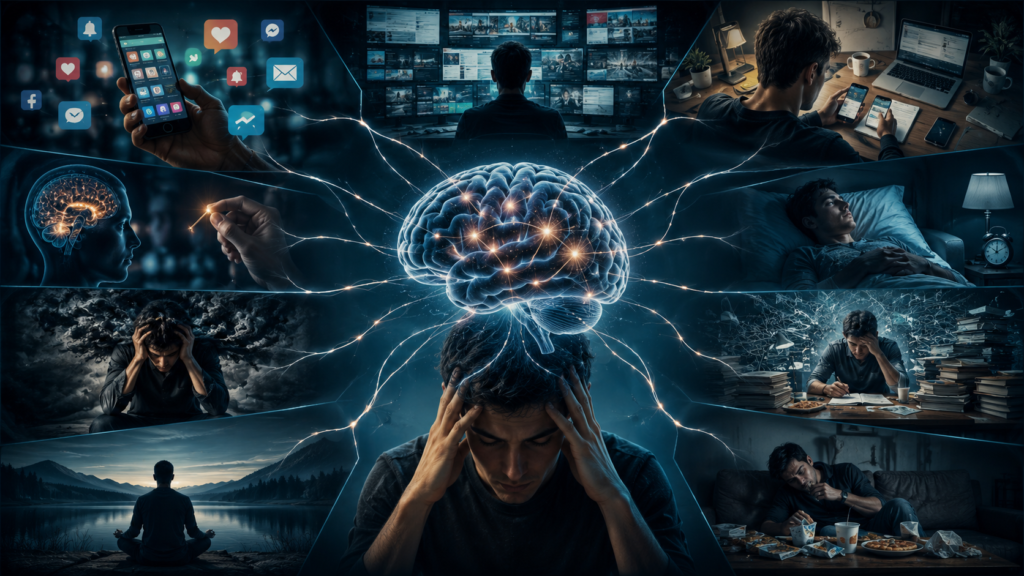
1. Constant Digital Distractions
Smartphones have transformed the way we communicate, learn, and work, but they have also changed how often our attention is interrupted.
Every notification, vibration, message, or breaking news alert asks the brain to decide whether something deserves immediate attention. Even if you ignore the notification, part of your attention has already shifted.
Over time, frequent interruptions can make sustained focus feel increasingly difficult because your brain becomes accustomed to constantly checking for new information.
2. Information Overload
Every day, your brain processes emails, conversations, social media posts, news headlines, podcasts, videos, advertisements, and countless other sources of information.
The problem isn’t simply the amount of information—it’s the speed at which new information arrives.
When more information enters working memory than it can effectively manage, mental fatigue begins to develop. Instead of processing ideas deeply, the brain starts moving rapidly from one piece of information to another.
This is one reason many people feel mentally busy while accomplishing less than they expected.
3. Multitasking Reduces Focus
Many people believe multitasking improves productivity.
Psychological research suggests otherwise.
In reality, the brain often switches rapidly between tasks rather than performing several demanding activities simultaneously. Every switch requires mental effort.
For example, answering messages while writing a report forces the brain to repeatedly change priorities. These repeated switches reduce efficiency, increase mistakes, and make sustained concentration more difficult.
The result is a growing feeling that your attention span has become shorter, even though much of the problem comes from frequent task switching.
4. Dopamine-Driven Habits
Many digital platforms are intentionally designed to encourage repeated engagement.
Unexpected notifications, endless scrolling, short-form videos, and personalized recommendations create frequent opportunities for novelty.
Novel experiences naturally attract attention because the brain’s reward system responds to new and potentially valuable information.
Over time, constantly seeking new stimulation can make slower activities—such as reading, studying, or long conversations—feel less immediately rewarding.
This doesn’t mean dopamine is harmful. Rather, it highlights how repeated habits can gradually shape where attention is directed.
5. Poor Sleep Quality
Attention depends heavily on sleep.
Even if you spend enough hours in bed, poor sleep quality can reduce alertness, slow information processing, and make distractions harder to ignore the next day.
Research suggests that sleep plays an essential role in memory, emotional regulation, and executive functioning. When sleep is disrupted, these cognitive processes may become less efficient.
This is why someone may struggle to focus despite believing they slept long enough.
Sleep doesn’t simply restore physical energy—it also supports the brain systems responsible for sustained attention and clear thinking.
6. Chronic Stress and Mental Fatigue
Stress doesn’t only affect emotions—it also changes how the brain allocates attention.
When you’re under chronic stress, your brain naturally prioritizes identifying potential problems over maintaining deep focus. This response may have been useful in dangerous environments, but in modern life it can make concentrating on everyday tasks much more difficult.
Instead of fully engaging with the task in front of you, your thoughts may repeatedly drift toward unfinished work, financial concerns, relationship issues, or future responsibilities. This mental load consumes cognitive resources, leaving fewer available for sustained attention.
Over time, chronic stress may contribute to mental fatigue, making even simple tasks feel mentally demanding. Many people interpret this as having a shorter attention span when, in reality, their brain is working harder simply to manage ongoing stress.
7. Cognitive Overload
Your brain has a limited capacity for processing information at any given moment.
When emails, meetings, notifications, conversations, deadlines, and constant decisions compete for attention, that capacity can become overwhelmed. Psychologists often describe this as cognitive overload—a state where the amount of incoming information exceeds what working memory can comfortably handle.
Instead of thinking clearly, you may find yourself forgetting details, rereading the same paragraph several times, or jumping between unfinished tasks without making meaningful progress.
This doesn’t mean your brain has become less capable. It simply means it’s trying to manage more information than it was designed to process at once.
8. Lack of Deep Focus
Modern life encourages frequent interruptions but rarely creates opportunities for uninterrupted thinking.
Deep focus occurs when your attention remains on one meaningful task for an extended period without switching. During these periods, many people produce their most creative ideas, solve complex problems more effectively, and learn new information more efficiently.
Unfortunately, constant interruptions reduce the amount of time available for this type of thinking. Even brief distractions can break concentration, requiring several minutes to fully regain focus.
As these interruptions become part of daily life, shorter periods of attention begin to feel normal—not because your brain has lost its ability to focus, but because it has fewer opportunities to practice sustained attention.
9. Lifestyle Habits That Reduce Attention
Attention is influenced by much more than technology alone.
Daily habits such as physical inactivity, poor nutrition, dehydration, excessive screen time, inconsistent routines, and limited exposure to natural environments can all affect how alert and mentally engaged you feel.
Regular exercise increases blood flow to the brain, while balanced nutrition provides the energy needed for healthy cognitive function. Spending time outdoors and taking short movement breaks may also help reduce mental fatigue and improve attention.
Although no single habit instantly transforms focus, small improvements practiced consistently often have a meaningful cumulative effect over time.
What Happens Inside Your Brain?
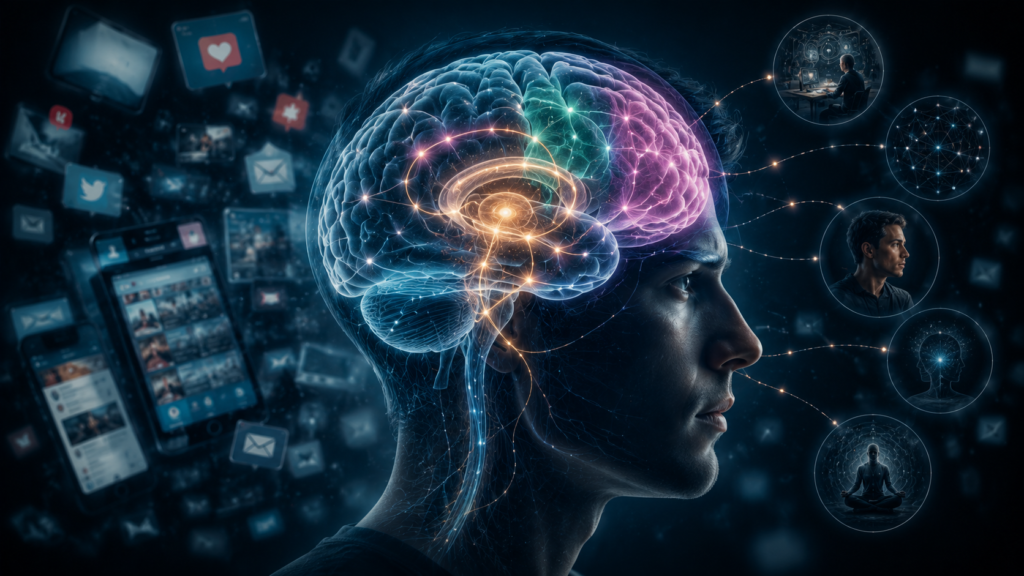
Understanding the neuroscience behind attention can make these everyday experiences easier to understand.
One of the brain’s most important attention systems involves the prefrontal cortex, the region responsible for planning, decision-making, self-control, and directing attention toward meaningful goals.
When this system is repeatedly interrupted by notifications, multitasking, or excessive cognitive demands, maintaining focus becomes more difficult. Rather than staying fully engaged with one activity, attention shifts more frequently between competing priorities.
The brain’s reward system also plays an important role. New information naturally attracts attention because novelty has historically helped humans identify important opportunities and potential threats. Digital technology continuously provides new content, encouraging the brain to repeatedly shift attention toward something different.
The encouraging news is that the brain remains adaptable throughout life. This ability—known as brain plasticity—means that attention patterns can change over time. Just as repeated distractions can strengthen habits of frequent task switching, healthier routines can gradually rebuild the ability to focus for longer periods.
Can Your Attention Span Improve?
For most people, the answer is yes.
Research suggests that attention is influenced by habits, environment, stress levels, sleep, and daily routines rather than being permanently fixed. While improvement may not happen overnight, consistent changes often lead to noticeable progress over time.
One common myth is that modern technology has permanently destroyed everyone’s attention span. Current evidence does not support such a simple conclusion. Instead, researchers generally view attention as highly adaptable, responding to the environments and behaviors we experience most often.
Another misconception is that experiencing attention difficulties automatically means someone has ADHD. Although ADHD can affect attention, temporary focus problems may also result from stress, sleep disruption, emotional exhaustion, cognitive overload, or lifestyle factors. These experiences alone should not be used for self-diagnosis.
The key takeaway is encouraging: your attention system is capable of adapting in positive ways when given the right conditions.
Science-Backed Ways to Improve Focus
Improving attention rarely requires a dramatic lifestyle overhaul. Small, consistent habits are often more effective than short bursts of motivation.
Start by reducing unnecessary digital interruptions. Turning off non-essential notifications and setting specific times to check messages allows the brain to remain focused for longer periods.
Practice single-tasking whenever possible. Completing one meaningful task before switching to another reduces cognitive load and helps rebuild sustained attention.
Protect your sleep by maintaining a consistent schedule and creating an environment that supports high-quality rest. Attention depends not only on how long you sleep but also on how restorative that sleep is.
Schedule periods of uninterrupted work where phones, emails, and social media remain out of sight. Even 30–60 minutes of focused work can strengthen concentration over time.
Finally, remember that attention improves through regular practice. Reading books, learning new skills, mindfulness exercises, and activities requiring sustained concentration all encourage the brain to develop healthier attention habits.
When Should You Seek Professional Advice?
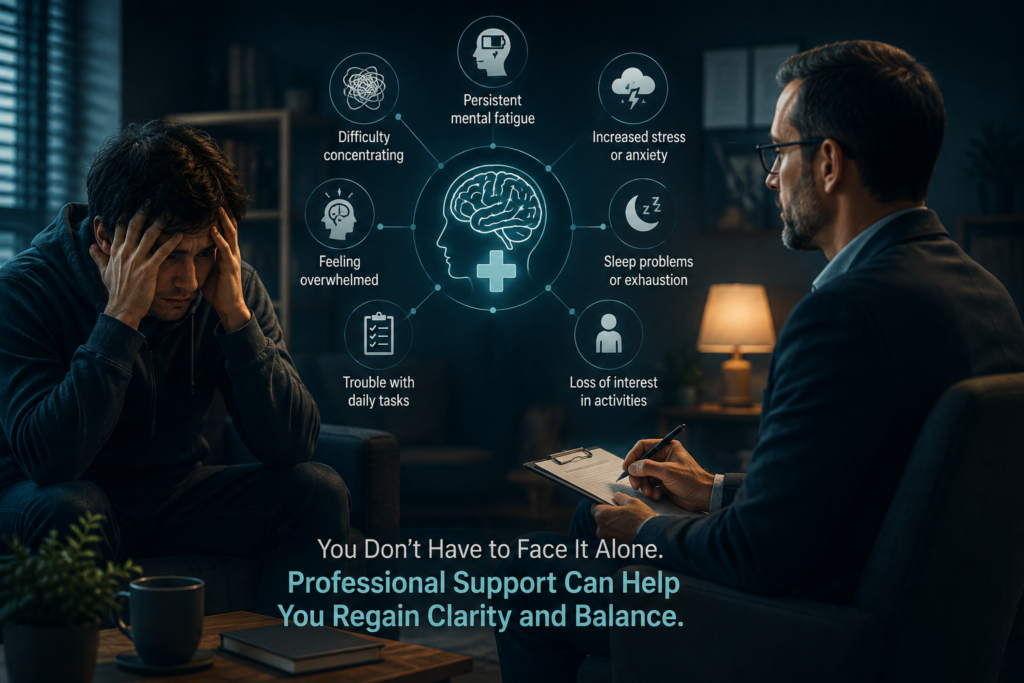
Occasionally losing focus is a normal part of being human, especially during stressful or demanding periods. However, if attention difficulties become persistent, significantly interfere with work, education, relationships, or daily functioning, it may be helpful to speak with a qualified healthcare or mental health professional.
Difficulty concentrating can have many possible causes, including chronic stress, poor sleep, nutritional deficiencies, medication side effects, or certain medical and psychological conditions. Because these possibilities often overlap, it’s important not to self-diagnose based on online information alone.
This article is intended for educational purposes and should not be considered medical advice. If your symptoms are persistent, worsening, or causing significant distress, seeking professional guidance can help identify the underlying cause and determine the most appropriate support.
Key Takeaways
- Your attention span may feel shorter because of digital distractions, information overload, stress, poor sleep, multitasking, and cognitive overload rather than a lack of intelligence or motivation.
- The brain is highly adaptable. The same brain that develops distraction habits can also rebuild stronger focus through healthier routines.
- Modern technology influences attention, but it is only one piece of a much larger picture that includes lifestyle, emotional well-being, and daily habits.
- Improving focus usually happens through small, consistent changes rather than quick fixes.
- Persistent attention difficulties deserve professional evaluation instead of self-diagnosis.
Frequently Asked Questions
Why does my attention span feel shorter than it used to?
Your attention span may feel shorter because modern life places constant demands on your brain. Digital distractions, multitasking, stress, poor sleep, and information overload can all reduce your ability to maintain sustained attention for long periods.
Can social media shorten your attention span?
Research suggests that frequent exposure to fast-paced, highly stimulating content may encourage more frequent attention switching. However, current evidence does not show that social media permanently damages the brain. Attention often improves when healthier digital habits are consistently practiced.
Is a short attention span the same as ADHD?
No. A short attention span and ADHD are not the same thing. Temporary focus problems can result from stress, poor sleep, emotional exhaustion, or environmental distractions. ADHD is a neurodevelopmental condition that requires a comprehensive professional assessment and should not be self-diagnosed based on attention difficulties alone.
Can adults improve their attention span?
Yes. Research indicates that many adults can strengthen attention through consistent habits such as improving sleep, reducing unnecessary digital interruptions, practicing single-tasking, exercising regularly, and creating dedicated periods of uninterrupted focus.
How long does it take to rebuild focus?
There is no single timeline because improvement depends on individual circumstances, lifestyle, stress levels, and consistency. Many people notice gradual improvements over several weeks as healthier attention habits become part of their daily routine.
Conclusion
If your attention span feels shorter than it once did, you’re not alone—and you’re certainly not powerless. Modern life constantly competes for your attention, making it easy to assume that losing focus is simply the new normal. Fortunately, psychology and neuroscience tell a more encouraging story.
Your brain is remarkably adaptable. While repeated distractions can shape your attention over time, healthier habits can also strengthen your ability to focus again. Protecting your sleep, reducing unnecessary interruptions, managing stress, and giving yourself regular opportunities for deep, uninterrupted work can gradually improve how your brain directs attention.
The goal isn’t to eliminate every distraction. It’s to create an environment where your brain has the opportunity to focus on what truly matters. Small, consistent changes practiced over time often produce far greater results than searching for a single perfect solution.
By understanding why your attention span feels shorter, you’re already taking the first step toward building stronger focus, better mental clarity, and a healthier relationship with the digital world.

