
Emotional maturity in relationships isn’t about staying calm all the time, winning arguments gracefully, or never needing anything from your partner. At its core, it’s the ability to notice what you’re feeling, take responsibility for how you act on it, and stay connected to someone else even when things get uncomfortable. It shows up less in the easy moments and more in the hard ones — the argument that could have escalated, the criticism that could have triggered a defensive spiral, the day that could have ended in silence instead of a conversation.
That distinction matters, because a lot of what gets called “emotional maturity” online is actually something else entirely — and mistaking one for the other can quietly keep people stuck in relationships that don’t serve them, or convince them they’re the immature one for having a normal emotional reaction.

What Emotional Maturity Actually Means (There’s No Single Test)
Here’s something most articles on this topic skip over: emotional maturity isn’t a single, formally validated psychological construct with one accepted measurement scale. Psychology studies it as a cluster of overlapping skills, each with its own research tradition — self-regulation, differentiation of self, emotional intelligence, and secure attachment behavior all describe pieces of the same picture from different angles.
That’s not a weakness in the science. It’s actually useful information, because it means emotional maturity isn’t a pass/fail trait you either have or don’t. It’s closer to a skillset — and like any skillset, someone can be strong in one area and still developing in another. A person can be deeply empathetic and still struggle to regulate their temper. Someone can be excellent at staying calm under pressure and still avoid vulnerability. Thinking of it as a toolkit, rather than a personality type, is the more accurate — and more forgiving — way to understand it.
The Stress Test: Why Maturity Is Hardest to Show When You Need It Most
Anyone can seem emotionally mature when a relationship is going smoothly. The real test happens under stress, because stress is what strips away the version of ourselves we’d like to present and leaves the version that’s actually running the show.
What Happens Under Stress
When something feels threatening — a sharp comment, a partner shutting down, a wave of jealousy — the body’s stress response activates before conscious thought catches up. Heart rate rises, attention narrows, and the kind of flexible, reflective thinking that conflict resolution requires becomes harder to access. This isn’t a character flaw; it’s a basic feature of how nervous systems respond to perceived threat. The difference between an emotionally mature response and a reactive one often comes down to what happens in the few seconds after that spike.
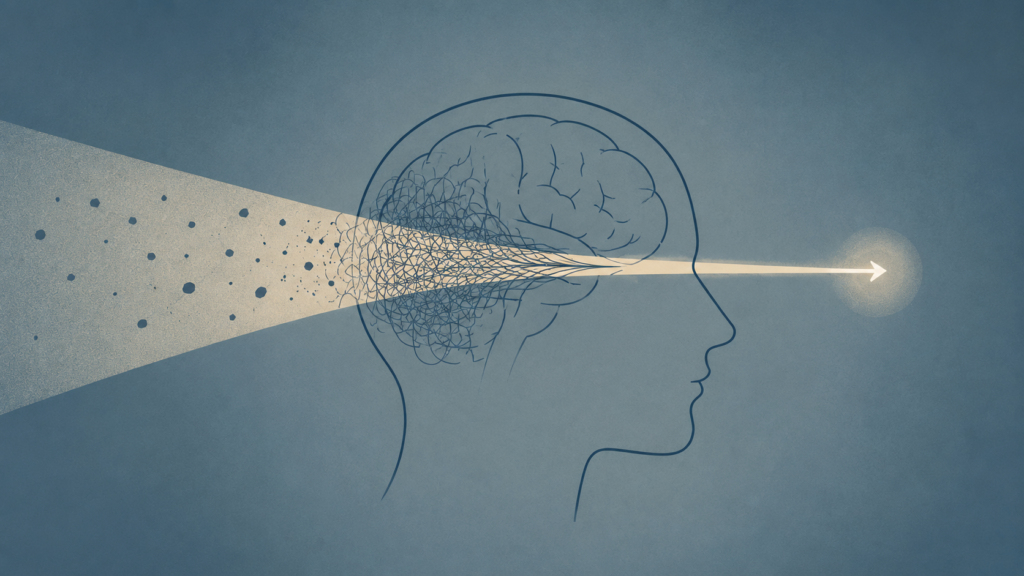
The Gap Between Trigger and Response
That short window — between feeling triggered and choosing how to respond — is where emotional maturity actually lives. Psychologist James Gross’s research on emotion regulation describes a process sometimes called cognitive reappraisal: consciously reframing a situation to change its emotional impact before reacting to it. In practice, it looks like noticing “I’m about to say something sharp” and choosing a different next move instead. It’s a skill, not a personality trait, which means it can be built with practice.
Four Common Triggers, Two Very Different Responses
| Trigger | Common Immature Pattern | Emotionally Mature Response |
|---|---|---|
| Conflict | Escalating, shutting down completely, or bringing up old grievances | Pausing to regulate, then returning to finish the conversation |
| Criticism | Getting defensive or turning the blame back on the other person | Listening first, and owning the part that’s fair before responding |
| Jealousy | Controlling behavior, checking up, or cold withdrawal | Naming the insecurity directly: “I’m feeling a little unsettled right now” |
| External stress | Snapping at a partner over something unrelated | Naming the limit: “Today was rough — I need some quiet before we talk” |
Myths That Get Mistaken for Emotional Maturity
Before getting into the actual signs, it’s worth clearing up a few things emotional maturity is often confused with — because getting this wrong has real consequences. People sometimes stay in relationships with cold, detached partners because stillness looks like strength. Others feel like something’s wrong with them simply because they cry or get upset.
Myth 1: Maturity means never getting upset. Feeling anger, sadness, or hurt isn’t immature — it’s human. What matters is how those feelings get expressed. A person who never shows emotion isn’t necessarily regulated; they may be shut down. Emotional flatness and emotional regulation can look similar from the outside but come from very different places.
Myth 2: Maturity means always keeping the peace. Constant agreeableness often isn’t calm confidence — it’s frequently a fear of conflict or abandonment. Differentiation of self, a concept from family systems theory, describes the capacity to stay connected to someone while still voicing your own needs, even when it creates friction. Avoiding all conflict isn’t maturity; it’s often avoidance wearing maturity’s clothes.
Myth 3: Confidence equals maturity. Charisma and success don’t tell you much about someone’s capacity for empathy, accountability, or vulnerability. Confidence is about how someone presents; emotional maturity is about how someone handles being wrong, being challenged, or being needed.
Myth 4: You either have it by adulthood or you don’t. Emotional maturity fluctuates. It’s shaped by stress levels, sleep, mental load, and how much conscious effort someone is putting into their own growth. A person can be more emotionally regulated on a good week and less so during a hard one — that’s not a contradiction, it’s how skills work.
The Core Signs of Emotional Maturity in Relationships
With those myths out of the way, here’s what emotional maturity tends to actually look like — not as a checklist to score a partner against, but as a way to notice the pattern in real behavior over time.

1. Taking accountability without collapsing or deflecting. There’s a difference between owning a mistake and either spiraling into shame or shifting blame elsewhere. Emotional maturity looks like “I said that wrong, and I’m sorry” — without turning it into either a meltdown or a counterattack.
2. Pausing before reacting. This is the practical application of the “gap” described earlier. It might look like noticing a surge of frustration mid-argument and saying, “I need a minute before I respond to that,” instead of firing back immediately.
3. Staying yourself during disagreement. Consider a composite example: Alex expects Sam home for dinner at 7. Sam texts at 7:15 saying work ran late. Alex feels a spike of frustration.
In one version, Alex snaps the moment Sam walks in — “You care more about work than this family” — and Sam gets defensive, and the evening unravels. In another version, Alex notices the tightness in their chest, waits a few minutes, and says instead: “I was looking forward to dinner together, so I felt disappointed when plans changed. Could you text me next time you know you’ll be late?” Same trigger, same feeling — very different outcome. The second version reflects differentiation: staying connected to the relationship without abandoning the need underneath the frustration.
4. Naming needs directly instead of testing or withdrawing. Jealousy, insecurity, and disappointment are common relationship experiences. The immature pattern often involves indirect signals — silence, checking behavior, subtle punishment. The mature version says the quiet part out loud: “I’m feeling insecure right now, and I think I just need to hear that we’re okay.”
5. Making — and accepting — repair attempts. The Gottman Institute’s research on couples describes “repair attempts” as the small gestures partners use to de-escalate tension during or after conflict — a softened tone, an attempt at humor, an offer to reconnect. Emotional maturity includes both making these gestures and being willing to accept them instead of holding onto the tension for its own sake.
6. Protecting your own limits without displacing stress onto a partner. A rough day doesn’t have to become a rough evening for someone else. Naming the limit — “I’m running on empty, I need some quiet before I can really talk” — protects the relationship rather than letting unrelated stress leak into it.
Recognizing It in a Partner vs. Recognizing It in Yourself
Most people come looking for information like this hoping to figure out their partner. Fewer expect the harder realization: it’s much easier to spot someone else’s patterns than your own.
Looking outward: the useful question isn’t whether a partner ever handles conflict badly — everyone does sometimes. It’s whether there’s a pattern over time. Does a sincere apology tend to lead to a real shift in behavior, or does the same loop repeat without change?
Looking inward: a fair question to sit with is this — when a partner pulls back or shuts down, is the instinctive response to give space, or to chase them down and demand an answer immediately? Emotional maturity in a relationship tends to be less of a solo performance and more of an interactive rhythm between two people.
It’s worth being cautious here about turning any of this into a diagnosis of someone else. Labels like “emotionally immature” get thrown around a lot in casual conversation, but using them to categorize a partner rather than to understand a pattern tends to create distance rather than resolve anything.
Building Emotional Maturity — Practical Steps That Start With You
The most useful place to start is with what’s actually within your control: your own responses.
A pause before responding. The next time something a partner says triggers a flash of frustration, try pausing for five seconds and noticing where it shows up in the body — a tight chest, a clenched jaw — before saying anything back.
Shifting the language. Moving from “you always ignore me” to “I feel disconnected when we don’t talk after work” changes a accusation into an observation, which tends to invite a very different response.
Two scripts worth having ready:
A time-out, used proactively rather than as a shutdown: “I care about working through this, but I’m too worked up to think clearly right now. Can we take twenty minutes and come back to it?”
A repair attempt after things have escalated: “That got off track. Can we reset? I want to actually hear what you were trying to say.”
One shared practice, if a partner is open to it. A brief weekly check-in can go a long way: “What’s one thing I did this week that made you feel cared for, and is there anything we could adjust?” It’s low-pressure, doesn’t require a formal “talk,” and keeps small frustrations from accumulating unaddressed.
Frequently Asked Questions
What does emotional immaturity look like in a partner? It often shows up as difficulty handling conflict or taking accountability — stonewalling during hard conversations, shifting blame, getting defensive, or relying on passive-aggressive behavior instead of direct communication. These patterns are worth noticing over time rather than judging from a single difficult moment.
Can emotional maturity be learned, or is it a fixed trait? Evidence suggests it can be developed at any stage of life. Because it’s made up of learnable skills — regulation, empathy, direct communication — rather than a fixed personality trait, it tends to respond to intentional practice, therapy, or simply consistent effort over time.
Is emotional maturity linked to age? Not directly. Brain development related to impulse control and planning continues into the mid-twenties, but emotional maturity beyond that point depends more on self-reflection and practice than on the passage of time. It’s entirely possible to meet a highly self-aware 24-year-old and a much older adult who still struggles with basic accountability.
How do you respond to an emotionally immature partner without losing your cool? Focus on what you can control — your own regulation and your own boundaries. Avoid matching an escalating tone, and use a clear, calm statement to pause things if needed: “I want to talk about this, but not while things are this heated. Let’s take some time and come back to it.”

This article is intended for educational purposes and should not be considered medical, psychological, or mental health advice. If relationship difficulties or emotional patterns are significantly affecting daily functioning, speaking with a qualified therapist or counselor may be helpful.

