
Introduction
You know you should probably go to bed, but one more video won’t hurt.
You tell yourself you’ll only check Instagram for two minutes, yet half an hour disappears before you realize it. You promise to start saving money, but an online sale convinces you to make another impulse purchase. You sit down to finish an important project, only to find yourself reaching for your phone every few minutes.
These situations may seem unrelated, but they all reflect the same psychological process: instant gratification.
Instant gratification is the tendency to choose a smaller reward now instead of waiting for a larger reward later. It isn’t simply a lack of discipline or motivation. In fact, it’s deeply connected to how the human brain evolved to learn, survive, and make decisions.
For thousands of years, choosing immediate rewards often increased the chances of survival. Finding food, seeking shelter, and responding quickly to opportunities helped our ancestors stay alive. Although modern life has changed dramatically, many of those ancient brain systems still influence our everyday choices.
Today’s world, however, presents a challenge our brains were never designed to handle. Smartphones, social media, online shopping, streaming platforms, and instant food delivery provide rewarding experiences within seconds. Every notification, every swipe, and every click offers the possibility of something enjoyable, making immediate rewards harder to resist than ever before.
This doesn’t mean your brain is working against you. It means your brain is doing exactly what it evolved to do—responding to opportunities that appear rewarding.
Understanding this process can change the way you think about self-control. Instead of asking, “Why am I so undisciplined?” you can begin asking, “How is my brain making this decision?”
That shift in perspective is important because lasting behavior change rarely comes from guilt or self-criticism. It comes from understanding the psychology behind our choices and creating environments that make better decisions easier.
In this article, you’ll discover what instant gratification really is, why the brain naturally prefers immediate rewards, how dopamine influences motivation, why modern technology makes self-control more difficult, and practical, evidence-based strategies that can help you build healthier habits over time.
What Is Instant Gratification?
Instant gratification refers to the desire to experience pleasure, satisfaction, or relief immediately instead of waiting for a greater reward in the future.
According to the American Psychological Association (APA), immediate gratification involves prioritizing short-term rewards over future consequences. While this tendency is a normal part of human psychology, relying on it too often may contribute to impulsive behavior, procrastination, and difficulty achieving long-term goals.
In simple terms, your brain often asks a very straightforward question:
“Why wait for something better tomorrow when I can feel good right now?”
That simple question influences countless everyday decisions.
Whether it’s scrolling through social media instead of working, buying something you don’t really need, or choosing junk food over a healthier meal, your brain naturally notices rewards that are available immediately.
This doesn’t mean immediate rewards are always harmful.
Watching your favorite movie, enjoying dessert, celebrating an achievement, or relaxing after a difficult day are all forms of instant gratification that can contribute positively to well-being.
The challenge begins when immediate rewards consistently replace actions that support long-term goals.
Everyday Examples of Instant Gratification

You probably experience instant gratification more often than you realize.
Common examples include:
- Scrolling social media instead of completing an assignment.
- Constantly checking notifications throughout the day.
- Buying something online because it’s on sale.
- Eating fast food instead of preparing a healthier meal.
- Watching “just one more episode” before going to sleep.
- Hitting the snooze button repeatedly.
- Playing games instead of studying.
- Avoiding a difficult conversation because temporary comfort feels easier.
Each of these decisions provides immediate emotional relief or pleasure.
The future consequences, however, often receive less attention because they feel psychologically distant.
Instant Gratification Isn’t the Same as Laziness
One of the biggest misconceptions about instant gratification is that it simply reflects laziness.
Psychology suggests otherwise.
Many ambitious, hardworking people still struggle with procrastination, impulsive spending, unhealthy eating, or excessive phone use.
Why?
Because the conflict isn’t necessarily between laziness and motivation.
It’s often a competition between two different reward systems:
- the immediate reward your brain can experience today,
- and the larger reward that may arrive weeks, months, or even years later.
Immediate rewards usually feel more emotionally powerful because they are available now.
Future rewards require imagination, patience, and planning.
Understanding this difference changes the conversation from self-blame to self-awareness.
Why Your Brain Prefers Immediate Rewards
To understand instant gratification, we need to understand one of the brain’s most important learning systems: the reward system.
Rather than simply creating pleasure, this network helps the brain learn which behaviors are worth repeating.
Throughout human evolution, this system encouraged behaviors that improved survival.
Finding food.
Building relationships.
Exploring new environments.
Learning useful skills.
Each rewarding experience taught the brain something valuable.
Although life has changed dramatically, the reward system continues to operate using many of the same principles.
The Brain’s Reward Network
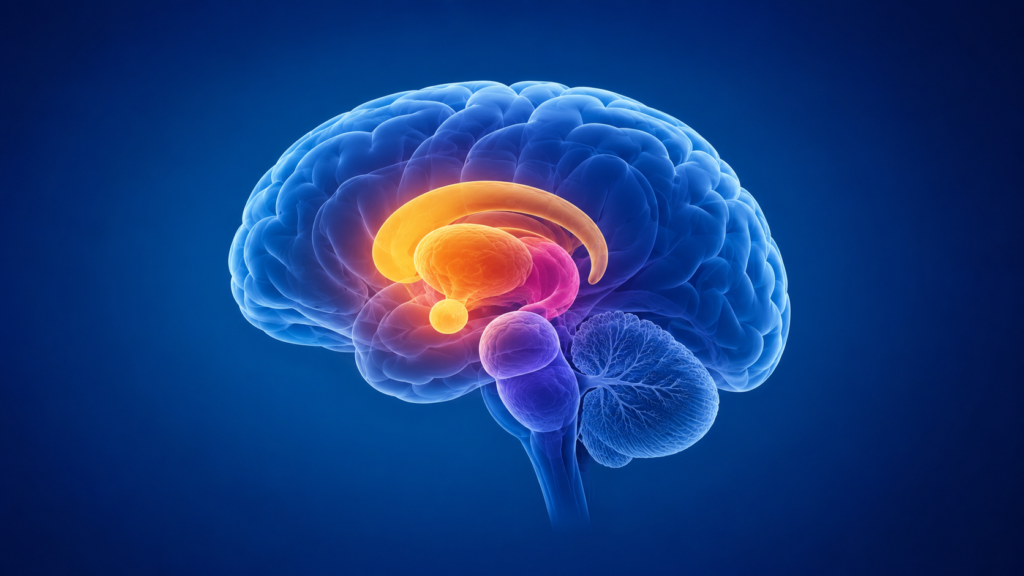
Several important brain regions work together whenever you anticipate or receive a reward.
One of the most important is the Ventral Tegmental Area (VTA).
This area contains dopamine-producing neurons that communicate with other regions involved in motivation and learning.
Those signals travel to the Nucleus Accumbens, which plays an important role in motivation and reward-seeking behavior.
Another major area is the Prefrontal Cortex.
Unlike the reward system, the Prefrontal Cortex helps with:
- Planning ahead
- Decision-making
- Impulse control
- Evaluating long-term consequences
- Staying focused on meaningful goals
Healthy decision-making depends on these systems working together.
One encourages exploration and reward-seeking.
The other encourages thoughtful planning.
Dopamine Is More Than the “Pleasure Chemical”
Dopamine is often described as the brain’s pleasure chemical.
While that description sounds simple, modern neuroscience suggests it is incomplete.
Research indicates dopamine is more closely involved in motivation, learning, and reward prediction than pleasure itself.
Instead of simply making us happy, dopamine encourages us to pursue experiences that might become rewarding.
Imagine hearing your phone vibrate.
Before you even read the message, your curiosity increases.
That anticipation reflects part of dopamine’s role.
The same thing happens when:
- You expect likes on social media.
- You receive a shopping discount.
- You smell your favorite food.
- You anticipate finishing an important project.
Rather than rewarding the outcome alone, dopamine helps the brain learn which behaviors deserve attention in the future.
Reward Prediction: How Your Brain Learns
One fascinating feature of the reward system is something researchers call reward prediction.
When something turns out better than expected, the brain strengthens the connection between that experience and the behavior that produced it.
Over time your brain begins learning patterns.
For example:
- “Checking my phone sometimes brings exciting news.”
- “Opening this app often entertains me.”
- “Ordering food saves time and feels comforting.”
The more often these experiences occur, the more automatic they become.
Eventually, simply seeing your phone on the table may create an urge to pick it up—even when no notification has appeared.
The Role of the Prefrontal Cortex
If the reward system encourages immediate action, what helps us pause before making impulsive decisions?
The answer is the Prefrontal Cortex.
This region supports:
- Self-control
- Long-term planning
- Problem-solving
- Goal setting
- Decision-making
When functioning well, it allows you to think:
“I’d like dessert, but I’ve already had enough sugar today.”
Or:
“I’ll finish this report before checking Instagram.”
Unfortunately, the Prefrontal Cortex does not always operate at full capacity.
Stress, poor sleep, emotional exhaustion, constant interruptions, and mental overload can reduce its effectiveness.
As a result, immediate rewards often become far more attractive.
This doesn’t mean you’ve suddenly become less disciplined.
It means the balance between impulsive reactions and thoughtful decision-making has temporarily shifted.
The Psychology Behind Instant Gratification
Understanding the reward system explains how the brain responds to rewards.
Psychology helps explain why those rewards sometimes feel impossible to resist.
Several psychological processes work together behind the scenes, shaping our choices without us fully realizing it.
In many situations, immediate rewards are not driven by pleasure alone.
They are driven by habits, emotions, learned behaviors, and the brain’s desire to conserve mental effort.
Habit Loops: Why Some Behaviors Feel Automatic

One reason instant gratification feels so powerful is that many rewarding behaviors gradually become habits.
Habits allow the brain to save energy. Instead of carefully thinking through every decision, the brain creates automatic routines that can be repeated with very little mental effort.
Behavioral psychologists often describe habits as a three-step cycle:
1. Cue
A trigger starts the behavior.
Examples include:
- Your phone vibrates.
- You feel bored.
- You finish work.
- You walk past your favorite coffee shop.
2. Routine
You perform the behavior.
For example:
- Open Instagram.
- Buy coffee.
- Eat a snack.
- Watch another episode.
3. Reward
The brain experiences something positive.
That reward could be:
- Entertainment
- Relief
- Comfort
- Social approval
- Curiosity satisfied
- Reduced stress
Each time the cycle repeats, the connection becomes stronger.
Eventually, the cue alone becomes enough to trigger the behavior—even before you consciously decide what to do.
Why Emotions Often Lead to Instant Gratification
Many people assume they seek immediate rewards because they enjoy pleasure.
Sometimes that’s true.
But more often, people seek instant gratification because they want to escape uncomfortable emotions.
Common emotional triggers include:
- Stress
- Anxiety
- Loneliness
- Boredom
- Frustration
- Mental fatigue
- Overwhelm
Imagine you’re working on a difficult assignment.
After twenty minutes, your concentration starts fading.
Without thinking, you open YouTube.
Were you suddenly desperate to watch videos?
Probably not.
More likely, your brain wanted a temporary break from mental effort.
The reward wasn’t the video itself.
It was the relief.
This explains why instant gratification often increases during stressful periods.
The brain naturally searches for experiences that quickly reduce discomfort.
Why Modern Life Makes Instant Gratification Harder to Resist
Human brains evolved in environments where rewards required effort.
Food had to be found.
Entertainment wasn’t available 24 hours a day.
Social approval came from face-to-face interactions.
Today’s world is completely different.
Now almost every reward is only a few taps away.
That changes how often the reward system becomes activated.
Smartphones
Every notification represents a possible reward.
It could be:
- A message from a friend.
- Good news.
- A funny video.
- A social media like.
Most notifications turn out to be ordinary.
But occasionally one is exciting.
Because the brain never knows which notification will be rewarding, it keeps checking.
This uncertainty makes the behavior surprisingly difficult to resist.
Social Media
Infinite scrolling removes natural stopping points.
Each swipe might reveal:
- Something funny.
- Something emotional.
- Something educational.
- Something surprising.
The next post could always be better than the last.
That possibility keeps people scrolling much longer than they originally intended.
Online Shopping
Shopping apps are designed to reduce waiting.
Flash sales.
Limited-time offers.
One-click purchasing.
These features create urgency and encourage quick decisions before thoughtful reflection can occur.
Streaming Platforms
Autoplay removes the need to make another decision.
Instead of asking,
“Would you like to continue?”
the next episode begins automatically.
Even tiny reductions in effort increase the likelihood that a behavior will continue.

Instant Gratification vs. Delayed Gratification
Instant gratification and delayed gratification are often presented as opposites.
One focuses on immediate rewards.
The other focuses on future rewards.
In reality, healthy decision-making usually requires both.
Immediate enjoyment isn’t the enemy.
Problems arise when immediate rewards consistently interfere with important long-term goals.
The Marshmallow Experiment
One of psychology’s most famous studies was conducted by Walter Mischel at Stanford University.
Children were given a choice.
Eat one marshmallow immediately.
Or wait a short time and receive two marshmallows.
For decades, people believed this experiment proved that children who waited would automatically become more successful adults.
Modern research paints a more balanced picture.
Self-control matters.
But so do many other factors, including:
- Family environment
- Education
- Financial security
- Trust
- Opportunity
The Marshmallow Experiment remains important because it demonstrates that delaying rewards is a valuable skill—not because it perfectly predicts future success.
Immediate Rewards Can Help Long-Term Goals
Research by psychologists Kaitlin Woolley and Ayelet Fishbach suggests something surprising.
People are more likely to continue difficult habits when those habits include small immediate rewards.
For example:
Instead of exercising only to lose weight months later…
Listen to your favorite podcast while exercising.
Instead of studying only for next month’s exam…
Drink your favorite coffee while studying.
These immediate positive experiences make long-term habits easier to repeat.
The lesson is simple.
You don’t always have to choose between immediate and future rewards.
Sometimes combining both works best.
The Science of Self-Control
Many people believe self-control is something you’re born with.
Psychology suggests otherwise.
Self-control is a skill that develops through habits, environment, planning, and repeated practice.
The Prefrontal Cortex
The Prefrontal Cortex helps you:
- Resist impulses.
- Plan ahead.
- Focus on important goals.
- Consider future consequences.
Unfortunately, this part of the brain becomes less effective when you’re:
- Sleep deprived
- Emotionally overwhelmed
- Chronically stressed
- Mentally exhausted
That’s why resisting temptation often feels harder after a long day.
Why Willpower Isn’t Enough
One of the biggest myths in self-improvement is that successful people simply have more willpower.
Research suggests successful people often depend less on willpower because they design environments that reduce temptation.
For example:
Instead of keeping snacks on the desk…
They keep fruit nearby.
Instead of leaving social media open…
They silence notifications.
Instead of hoping they’ll exercise…
They schedule workouts in advance.
Small environmental changes reduce the number of difficult decisions the brain must make.
If–Then Planning
Psychologist Peter Gollwitzer developed one of the most effective behavior-change techniques known as Implementation Intentions.
The method is simple.
If Situation X happens… Then I will do Behavior Y.
Examples:
If I want to check Instagram while studying…
Then I’ll finish one more page first.
If I feel like buying something unnecessary…
Then I’ll wait twenty-four hours before deciding.
If I wake up and want to press snooze…
Then I’ll immediately place both feet on the floor.
Research suggests these simple plans increase the likelihood of following through because the decision has already been made before temptation appears.
10 Science-Backed Strategies to Reduce Instant Gratification

- Make healthy choices easier than unhealthy ones.
- Remove unnecessary temptations from your environment.
- Use If–Then Planning every day.
- Reward yourself during long-term habits.
- Delay small temptations by five to ten minutes.
- Replace unhealthy habits instead of simply removing them.
- Reduce decision fatigue by creating routines.
- Prioritize sleep and stress management.
- Identify emotional triggers before reacting.
- Ask yourself:
“Will my future self thank me for this decision?”
Dopamine Detox: Myth vs Reality
The phrase “dopamine detox” has become extremely popular online.
Unfortunately, it is often misunderstood.
You cannot “flush out” dopamine from your brain.
Dopamine is essential for learning, movement, motivation, and normal brain function.
What research does support is reducing overstimulation.
Taking intentional breaks from endless scrolling, constant notifications, excessive gaming, or other highly stimulating activities may help improve attention and reduce automatic habits.
The goal is not to remove dopamine.
The goal is to create healthier patterns of behavior.
Frequently Asked Questions
Is instant gratification always bad?
No.
Immediate rewards are a normal part of life.
Problems usually occur only when they repeatedly interfere with important long-term goals.
Is dopamine the brain’s pleasure chemical?
Not exactly.
Current research suggests dopamine plays a larger role in motivation, learning, and reward prediction than pleasure itself.
Can self-control improve?
Yes.
Research indicates self-control can strengthen through practice, supportive environments, and healthy habits.
Is dopamine detox scientifically proven?
No.
Current evidence does not support the idea of “resetting” dopamine.
However, reducing overstimulation may help improve focus and reduce unhealthy habits.
Final Thoughts
Instant gratification isn’t a personal flaw.
It’s a natural feature of the human brain.
Your brain evolved to notice immediate rewards because, throughout history, those rewards often improved survival.
Today’s environment is different.
Technology provides endless opportunities for quick rewards, making patience more difficult than ever.
The good news is that your habits are not fixed.
Every small decision teaches your brain something.
Every healthy routine strengthens new patterns.
Every intentional choice makes future good choices a little easier.
Instead of trying to become a completely different person overnight, focus on making one better decision at a time.
Long-term success rarely depends on one extraordinary moment.
It grows from ordinary choices repeated consistently over weeks, months, and years.
The brain learns through repetition.
Fortunately, that means healthier habits can become just as automatic as unhealthy ones.
Key Takeaways
- Instant gratification is a normal part of human psychology.
- Dopamine influences motivation and learning more than pleasure itself.
- Modern technology increases exposure to immediate rewards.
- Self-control is a skill that can be developed.
- Small environmental changes often work better than relying on willpower alone.
- Consistent habits—not perfection—create lasting change.
Educational Disclaimer
This article is intended for educational purposes only and should not be considered medical, psychological, or mental health advice. If emotional or behavioral concerns are significantly affecting your daily life, consider seeking guidance from a qualified healthcare or mental health professional.

